Mobile App
Development Services
We design and build mobile applications that people actually want to use. Combining product thinking with engineering rigour, we deliver iOS and Android experiences that perform reliably across devices and integrate cleanly with your back-end systems.


Mobile Development
Built for Real Users
[✳]Most mobile applications fail not because of technology limitations, but because they ignore how people actually use phones. Real users interrupt tasks, switch apps, lose signal, and exhaust battery. Apps built in development environments—where networks are fast, devices are new, and workflows are linear—crash or frustrate users the moment they encounter reality. We've learned through dozens of iOS and Android projects that the difference between an app users keep and one they delete is whether the team understood platform constraints from the start.
Our approach starts with understanding your users' context. We ask how they'll interact with the app when distracted, offline, or switching between tasks. We design for common constraints: battery life, intermittent connectivity, diverse device capabilities, and interruption. We prototype and test on real devices—not simulators—before committing to architecture decisions. We build shared component libraries so iOS and Android codebases stay consistent without duplicating effort. That discipline up front saves months later, when the app already exists but needs to ship to thousands of users who expect it to work the first time.

User engagement and retention
Achieved by building responsive, fast mobile experiences that respect users' time and attention through thoughtful interaction design and reliable performance.
Application performance and stability
Delivered by optimising for battery life, memory usage, and network efficiency across device generations, ensuring the app stays responsive under real-world conditions.
Team velocity and code quality
Enabled by building shared component libraries and architectural patterns that let iOS and Android teams work in parallel without duplicating effort or fighting inconsistency.
Faster time to market
Driven by leveraging shared frameworks and tools that accelerate iOS and Android development, reducing the overhead of maintaining two platforms simultaneously.
Our Solutions
[✳]We deliver proven mobile development solutions to the recurring problems we encounter across iOS and Android projects. Each solution reflects what we've learned from production deployments: how to structure code for reuse, how to optimise for real devices, and how to ship features without sacrificing stability. The patterns below carry architecture decisions, testing strategies, and operational knowledge that new engagements can build on instead of starting from scratch.
We design and build from the ground up for each platform, using native frameworks and languages rather than cross-platform abstractions. Native development gives us the performance, platform-specific UI patterns, and device integration that users expect. We structure code to maximize reuse between platforms where it makes sense—business logic, data models, networking—whilst keeping platform-specific code isolated and maintainable.


For projects where time and budget favour a single codebase, we work with modern cross-platform frameworks that deliver responsive, performant experiences. We're pragmatic about framework selection: React Native and Flutter both work well, but each has trade-offs in performance, ecosystem maturity, and platform-specific capability. We validate the choice against your specific constraints before committing.


Apps that work on the simulator often struggle on real devices. We profile performance on the devices your users actually own, identifying memory leaks, excessive battery drain, and slow rendering. We optimise for the constraints: compression algorithms for network efficiency, caching strategies for offline functionality, and rendering pipelines that stay responsive under load. Performance improvements often unlock new features and capabilities without rewriting core systems.


Apps that require constant connectivity are fragile. We design systems that work offline—storing local data, synchronising when the network returns, resolving conflicts intelligently. Offline-first architecture is particularly important for field operations, healthcare, and supply chain applications where connectivity is unreliable. The same patterns make apps feel faster because they're not waiting for network round-trips on every interaction.


Users encounter problems you never see in testing. We integrate structured logging and crash reporting so you understand what's happening in production: which features are actually used, where users drop off, what devices and OS versions cause issues. This telemetry becomes the feedback loop that prioritises the next round of improvements.


Where We Work
)Mobile applications power user-facing workflows across industries. We bring production experience from finance, healthcare, insurance, retail, and more.
- Financial Services & Banking
- Fintech & Payments
- Healthcare & MedTech
- Insurance & Insurtech
- SaaS & Enterprise Software
- Retail & E-Commerce
- Real Estate & PropTech
- Travel & Hospitality
- Logistics & Supply Chain
- IoT & Connected Devices
- Education & E-Learning
- Entertainment & Media
Case Studies
[3]- Catch: brand identity for a modern front office platform

A complete brand identity and unified UX system for Catch — a front office & POS platform for sports venues across North America — carrying a product that processes $10m+ a year and runs 100+ venues into its next stage of growth.
- Trading App
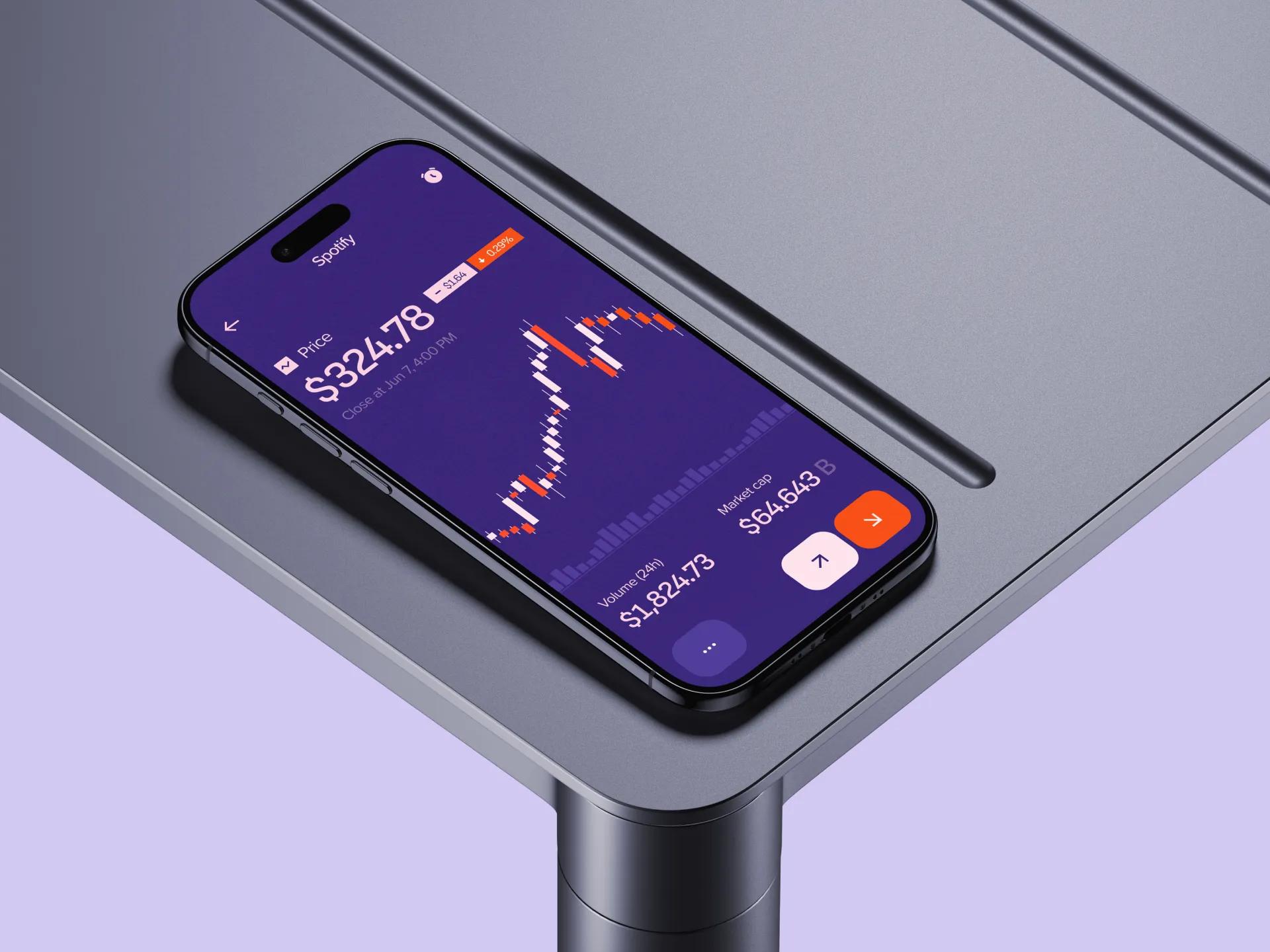
How we built a demo-ready mobile trading app that unifies stocks, mutual funds and bonds in one account for a pre-seed fintech startup, with 100% feature coverage at investor demo.
- Vorx
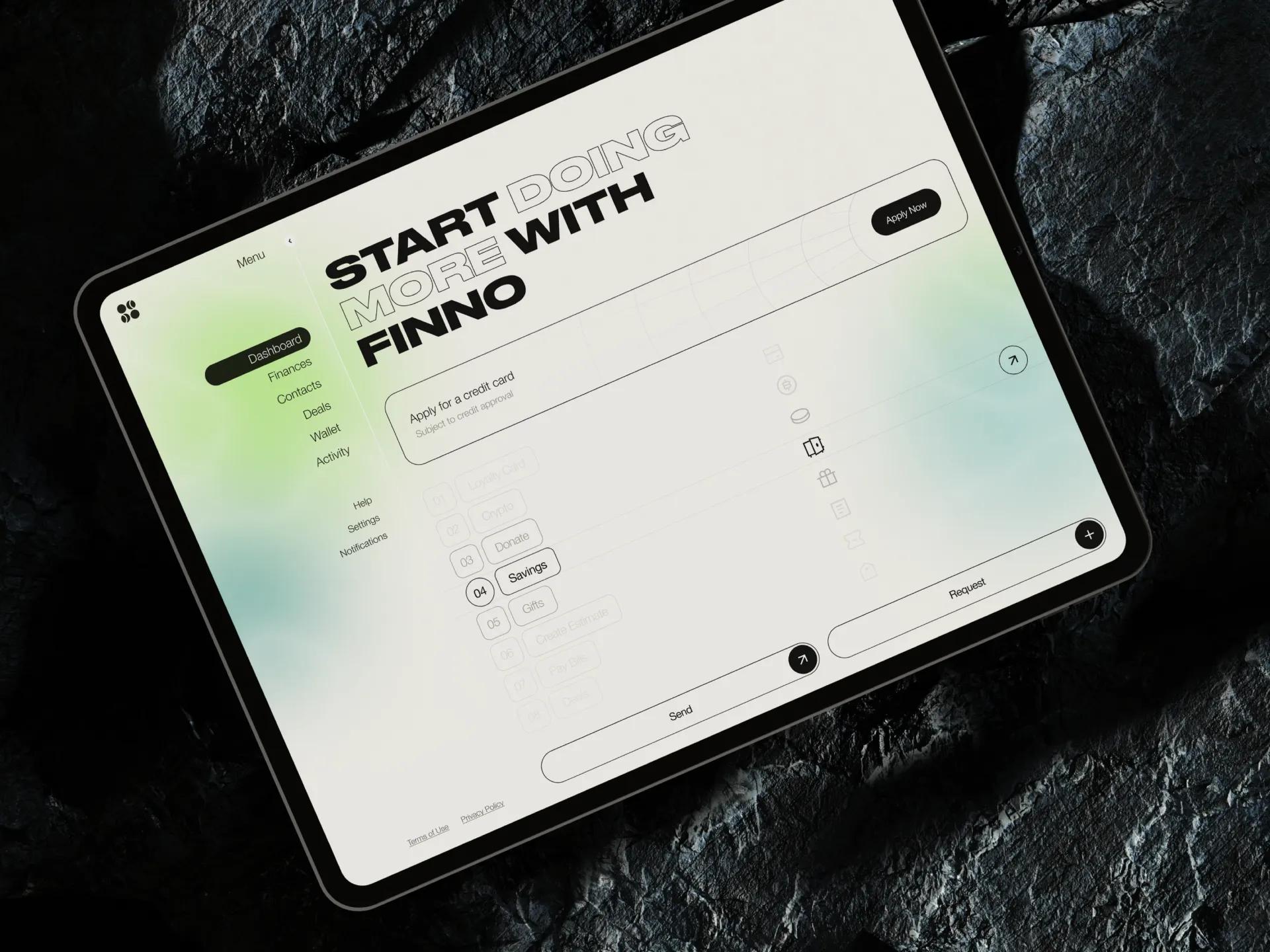
Personal finance account aggregation app
US personal finance platform that unifies bank accounts, creates intelligent budgets, and tracks financial goals through open banking APIs and resilient account-aggregation architecture.

Mobile Development Execution
Framework
[✳]Every mobile application is built for a specific set of users, devices, and use cases. Generic frameworks and "best practice" checklists miss the context-specific decisions that determine whether the app succeeds or fails. Building applications that work reliably requires understanding the constraints upfront, not discovering them when users start complaining.












Engagement
Models
[✳]Retainer (Monthly or Quarterly)
The primary engagement model for ongoing mobile development work, feature delivery, and maintenance. Provides dedicated team capacity, predictable budgeting, and priority scheduling. Works best for apps in active development, continuous improvement, and long-term partnerships where deep product knowledge drives efficiency.
Fixed Scope App Project
Available for projects with clearly defined scope, success criteria, and feature list. Provides cost certainty and a defined delivery date. Best suited for new app launches, single-platform updates, or well-scoped feature sets where the requirements are stable upfront.
Time & Materials (Project Boost)
Best suited for short-term development acceleration, specific expertise needs, or variable scope projects. Billing is based on actual hours worked with complete visibility into team composition and time allocation. Maximum flexibility to scale capacity as priorities shift or scope evolves.
Dedicated Mobile Team
A specialised iOS and Android team embeds within your organisation, working directly on your mobile products as an extension of your engineering team. This model works well for organisations with long-term mobile roadmaps, rapid experimentation, or when you need hands-on guidance on architecture and platform decisions.

FAQ
[13]Should we build native iOS and Android applications, or use a cross-platform framework?
Native development delivers better performance, platform-specific UI patterns, and full access to device capabilities. However, it means maintaining two codebases and scheduling separate releases for each platform. Cross-platform frameworks (React Native, Flutter) share a single codebase and accelerate time to market, but they add an abstraction layer and may limit access to newer platform features.
The right choice depends on your constraints: budget and timeline, performance requirements, the sophistication of native features you need, and the devices your users target. If you're building a consumer app with complex interactions and performance requirements, native is usually worth the overhead. If you're building an enterprise app where the primary constraint is time to market and your requirements are straightforward, cross-platform often makes sense. We evaluate your specific situation and recommend accordingly.
How much does mobile app development cost?
Costs vary widely based on scope, complexity, whether you're building one platform or two, and the level of customisation your design requires. A simple app with straightforward features might run £40,000–80,000. A more complex app with offline functionality, real-time features, and custom design could be £150,000–300,000 or more. Apps with significant backend integration, API development, or complex data synchronisation add to the cost.
We're transparent about cost drivers and help you understand where your budget goes. Early in the engagement, we produce a detailed estimate with defined scope, deliverables, and assumptions. If scope or requirements change, we surface the impact on budget and timeline explicitly so you can make informed decisions.
How long does it take to build a mobile app?
Timeline depends on scope, complexity, and team size. A straightforward app might launch in 3–4 months. More complex applications with backend integration, offline functionality, or custom design often take 6–9 months. Very ambitious projects might extend longer.
Timeline also depends on your availability for feedback and decisions. Apps move fastest when the product team can make decisions quickly and provide regular feedback during development. Scope creep and changing requirements extend timelines significantly, which is why we prioritise clear requirements and staged delivery.
What's your approach to testing mobile applications?
We test on real devices from day one, not just simulators. Simulators miss memory constraints, battery drain, network variability, and screen size differences that real devices expose. Our quality assurance includes: unit tests for business logic, integration tests for API interactions, UI automation tests for critical workflows, and manual testing on a matrix of real devices and OS versions.
We also build crash reporting and analytics into the app so we catch production issues quickly. Post-launch, we monitor performance metrics and user behaviour to prioritise the next round of improvements.
How do you handle offline functionality and data synchronisation?
Offline-first architecture means the app stores data locally and synchronises with the backend when the network is available. This makes the app feel faster and more responsive, even on good networks. It also makes the app resilient to poor connectivity, which matters for field operations, travel, and other scenarios where network is unreliable.
The challenge is conflict resolution: if the user makes changes offline on two different devices, which version wins? We implement strategies that depend on your use case: last-write-wins for simple scenarios, multi-version concurrency control for more complex situations, or explicit user resolution when the business logic demands it. We document these decisions and build the testing infrastructure to validate them.
What's your experience with app performance optimisation?
We profile apps on real devices and identify where time and energy are being spent. Common issues include memory leaks, excessive rendering, network inefficiency, and battery drain. We optimise for the constraints: compression and caching to reduce network usage, lazy loading and virtualisation to reduce memory footprint, and efficient rendering to maintain responsiveness.
Performance improvements often unlock new features—better battery life means the app can do more work in the background; lower memory usage means it works on older devices; faster network means more frequent updates without user frustration. We measure impact at each stage so you understand the trade-offs.
How do you approach integration with backend systems?
Mobile apps almost always need to talk to a backend. We design API contracts upfront so mobile and backend development can proceed in parallel. We use versioning and gradual rollout strategies so backend changes don't break existing app versions. We implement proper error handling: the app should degrade gracefully when the API is slow or unavailable, not crash.
For complex integrations—payments, authentication, real-time data—we often collaborate with your backend team or recommend specific technologies that make integration safer and faster. We also implement robust logging and monitoring so we can debug issues in production quickly.
Do you handle app store submission and launch?
Yes. We prepare store listings with compelling descriptions, screenshots, and metadata optimised for discoverability. We handle beta testing through TestFlight (iOS) or Google Play Console (Android) so you can test with real users before launch. We submit the app to the store and handle feedback from reviewers. Post-launch, we monitor crash reports and user ratings, prioritising critical fixes.
What's your experience with different device types and OS versions?
Mobile apps run on diverse devices with different screen sizes, processing power, and OS versions. We test on a representative sample of devices your users actually own—not just the latest flagships. We support OS versions back to a reasonable minimum (typically 2–3 major versions), balancing the effort of supporting old devices against the cost of excluding them.
We use feature detection and graceful degradation so the app works on older OS versions even if it can't use the newest platform features. Analytics help us understand which devices and OS versions your users actually use, so we can make informed decisions about support windows.
How do you measure success for a mobile app?
Success metrics depend on your business. For consumer apps, we track daily active users, session frequency, crash rates, and feature usage. For enterprise apps, we track adoption, support requests, and productivity gains. For e-commerce apps, we track conversion rates and average order value.
We build analytics into the app from the start and establish a baseline before launch. Post-launch, we review metrics monthly and use them to prioritise improvements. If an app isn't meeting its goals, we investigate: is it a marketing problem, a product problem, a technical problem, or a market problem?
Can you recommend architecture patterns and technology choices?
Yes. Architecture decisions made early have outsized impact on long-term maintenance. We help you evaluate options: monolithic versus microservices, synchronous versus asynchronous APIs, local storage versus cloud sync. We make recommendations based on your constraints, not trends.
For technology, we stay pragmatic. We're comfortable with native platforms (Swift on iOS, Kotlin on Android) and modern cross-platform frameworks. For backends, we work with Node, Python, Go, Java, and other stacks. For databases, we evaluate SQLite for local storage, PostgreSQL for structured data, and specialized solutions (Firebase, Supabase) for specific use cases.
What's the difference between building an MVP and a production app?
An MVP demonstrates the core idea with minimum features, helping you validate whether users want the product. A production app adds reliability, performance, and scale. The difference is usually in: error handling and fallback logic, testing coverage, performance optimisation, monitoring and observability, and security hardening.
MVPs are worth building fast, but they shouldn't cut corners on fundamentals like testing and code review. A well-engineered MVP is easier to evolve into a production system than a hastily-built prototype.
How do you keep costs under control during development?
We scope work clearly upfront and track progress against the scope. We prioritise features so the highest-value items ship first, and lower-priority items can be deferred or cancelled if budget gets tight. We flag scope creep immediately so you understand the impact on timeline and budget before committing.
We also favour patterns that reduce complexity: shared component libraries, established architectural patterns, and proven third-party libraries rather than custom code. Technical debt gets surfaced so you understand the trade-offs between speed and maintainability.