Dedicated Development
Teams
We place experienced development teams directly into your organisation, working as a seamless extension of your in-house capability. Our engineers integrate with your processes, tools and culture, giving you the consistent bandwidth to execute on your product roadmap. Through rigorous team matching and hands-on onboarding, we deliver dedicated teams that contribute from day one.


Dedicated Teams That Integrate
Like Permanent Staff
[✳]Most team augmentation fails because the engineers feel like contractors—they're separate from your culture, they don't understand your business context, and they leave as soon as a project finishes. We build teams that actually integrate. Our approach begins with detailed discovery of your team structure, product roadmap, and working culture. We match engineers with specific expertise, onboard them directly into your team structure, and they report to your engineering leadership. When a dedicated team is working well, your team should not notice they were external.
That's why we invest heavily in onboarding and team cohesion from the start. We work with your engineering leadership to define the team's charter, scope, and success metrics, then build structured ramp-up milestones to establish trust and productivity quickly. We embed senior engineers into your processes and culture, making sure knowledge flows both directions—your team learns how we work, and our engineers absorb your product context and technical decisions. Dedicated teams that integrate succeed because they're treated as permanent staff, not as contingent labour waiting for the next project.

Product velocity increase
Consistent experienced engineering capacity aligned directly with your product roadmap, enabling sprint cycles to execute without engineering bottlenecks or context-switching overhead.
Reduced engineering burden
Handling recruitment, onboarding, team management, and HR administration—removing the overhead of scaling your engineering organisation while you focus on product strategy.
Maintained code quality
Embedding senior engineers into your team who establish code review practices, architectural standards, and technical oversight that prevent quality degradation as the team scales.
Knowledge retention
Integrating dedicated teams deeply into your workflows, capturing product knowledge and technical decisions through paired programming, code reviews, and structured handoff processes.
Our Solutions
[✳]We deliver dedicated teams designed around five recurring problem types, each refined through repeated production deployment. Every team configuration includes hands-on leadership integration, structured onboarding, and architectural oversight to ensure engineers contribute meaningfully from the first sprint. The solutions below represent the most common team shapes we're asked to build, but we design custom team structures when product needs or growth phases demand it.
End-to-end capability covering front-end, back-end, database architecture, and infrastructure, structured to integrate into sprint cycles and report to your engineering leadership. Engineers handle feature delivery across the entire stack, reducing the context-switching that plagues shared engineering teams.


Deep expertise in focused domains like machine learning, mobile development, or cloud infrastructure, embedded as specialists within your broader engineering organisation. These teams solve problems that generalised engineers can't, without requiring permanent headcount for niche expertise.


Build new products or business units from the ground up, owning architecture decisions, technology selection, and the transition to a permanent internal structure. These teams move fast through initial validation and scale gradually as product-market fit emerges.


Ongoing product maintenance, minor feature development, and technical debt reduction for mature products, staffed with senior engineers who understand system design and can make architectural improvements without disrupting production.


Build internal platforms, developer tooling, CI/CD infrastructure, testing frameworks, monitoring systems, and deployment automation. These teams reduce friction across your engineering organisation by investing in shared systems that make all teams faster.


Where We Operate
)Our dedicated team placements work across sectors where consistent engineering capacity and specialised expertise drive competitive advantage. Clients trust us to deliver experienced engineers who integrate quickly and maintain high code quality across diverse product domains.
- Asset Management
- Fintech
- Payment Processing
- Financial Services
- Audit & Assurance
- Healthcare
- Insurance
- E-commerce
Case Studies
[3]- Catch: brand identity for a modern front office platform

A complete brand identity and unified UX system for Catch — a front office & POS platform for sports venues across North America — carrying a product that processes $10m+ a year and runs 100+ venues into its next stage of growth.
- Branding for Digital Bank
A complete visual identity system — logo, palette, typography, illustration language, and an 80-template application kit — built for a pre-launch European digital bank ahead of its Series A round.
- Trading App
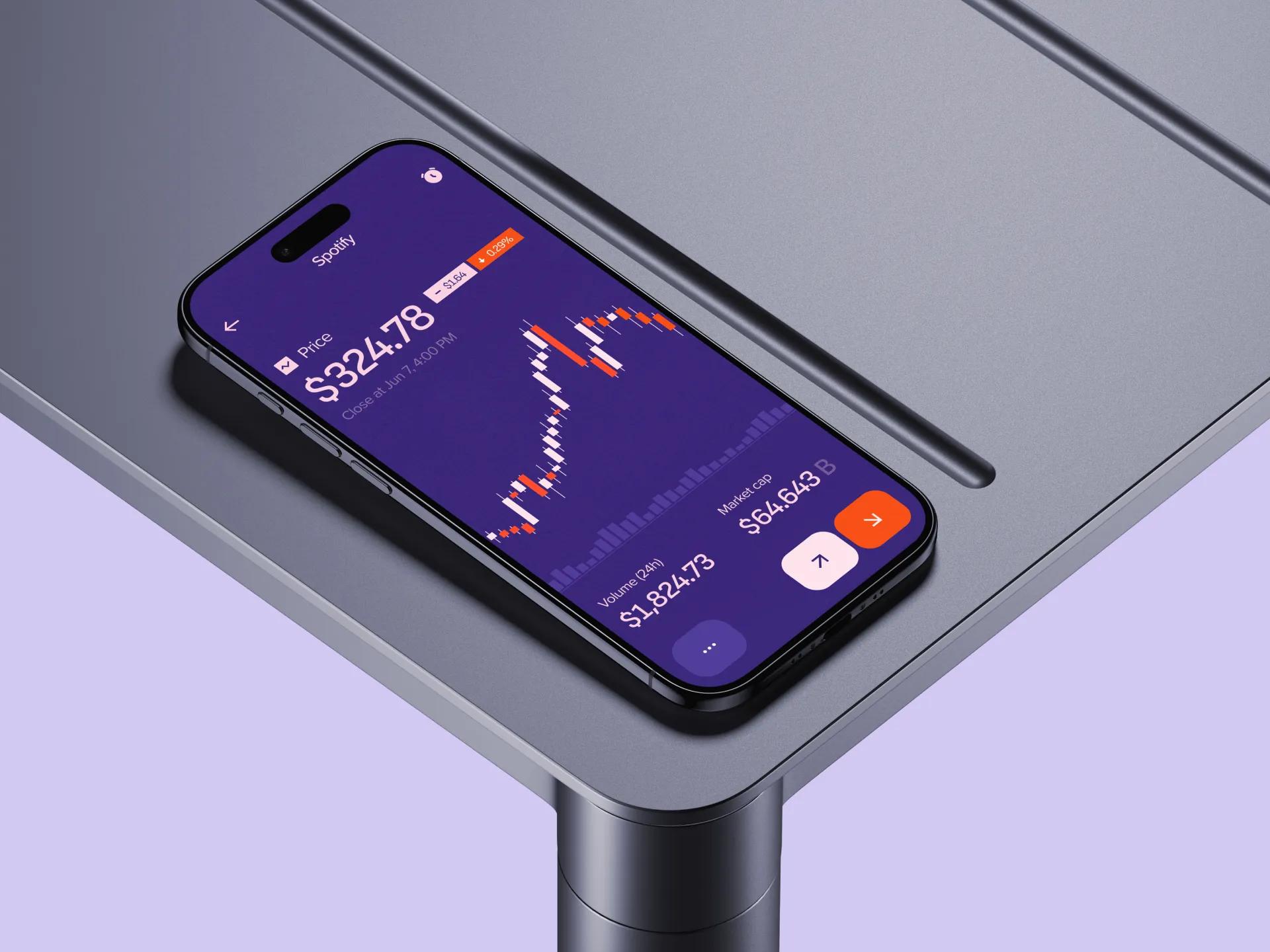
How we built a demo-ready mobile trading app that unifies stocks, mutual funds and bonds in one account for a pre-seed fintech startup, with 100% feature coverage at investor demo.

Team Discovery and
Integration Framework
[✳]Building a dedicated team requires more than hiring—it requires matching engineers with your specific context, setting expectations clearly, and onboarding deliberately. Every team starts differently because every organisation has unique engineering culture, technical constraints, and product priorities. We focus on understanding those specifics before any interviews happen, so placements stick and teams contribute immediately.












Engagement
Models
[✳]Monthly or Quarterly Retainer
Committed team capacity on a recurring basis, providing predictable budgeting and the ability to scale team size within the retainer agreement. Works best for ongoing product development where consistent capacity matters more than fixed scope. The retainer model gives you stability and flexibility to adjust team size as priorities shift.
Fixed Duration Team Placement
A dedicated team committed for a defined period—typically 6–12 months—supporting a specific product initiative, growth phase, or major project. Fixed duration placements suit situations where you need surge capacity for a time-bounded initiative, then transition the work to permanent staff or wind down as the project completes.
Time & Materials (Scaled Team Model)
Flexible team capacity that scales up or down based on your actual needs, with billing based on team utilisation. This model works when your requirements fluctuate, when you're validating whether you need permanent hire capacity, or when you want to pilot a dedicated team structure before committing to a longer engagement.
Dedicated Team Model
A full team with direct reporting to your engineering leadership, fully integrated into your organisation, available for long-term strategic initiatives and sustained product development. This model suits situations where you need the team to operate as permanent staff, report directly to your CTO or VP Engineering, and maintain deep ownership of critical systems.

FAQ
[13]What are the benefits of a dedicated software development team?
Dedicated teams deliver consistent, experienced capacity that doesn't context-switch between projects. You get specialised technical knowledge aligned with your specific product and stack, without the overhead of recruiting, onboarding, and managing headcount directly. Teams operate with cross-functional depth—they move across front-end, back-end, and infrastructure without passing work between silos. Because they report to your engineering leadership and integrate into your processes, knowledge stays with the team rather than walking out the door. The administrative overhead of recruitment, benefits, equipment, and performance management shifts to us, freeing your HR and finance teams to focus on building permanent staff strategy instead of managing contingent labour. Teams ramp fast because we handle the vetting, so your engineering leadership focuses on onboarding and mentoring rather than technical screening. And you pay only for the capacity you use, scaling up or down without the financial commitment of permanent headcount.
How do you ensure code quality with dedicated teams?
We embed senior engineers into the team who establish code review disciplines, architectural standards, and technical direction. Before the team starts, we review your existing codebase to understand quality baselines and common patterns. During onboarding, we establish code review practices that match your standards—whether that's pair programming, architecture review boards, or structured PR review cadences. We also measure code quality continuously through static analysis, automated testing, and architectural fitness functions, so degradation is flagged before it becomes a technical debt problem. Code quality is maintained because senior engineers on the team have the authority to push back on shortcuts, and because the team is treated as permanent staff rather than measured solely on velocity metrics.
What are the differences between dedicated teams and staff augmentation?
Staff augmentation fills specific skill gaps for short-term projects, typically with junior or mid-level engineers working on well-defined tasks. Dedicated teams go deeper—they own entire product areas, make architectural decisions, and report to your engineering leadership. With staff augmentation, you're usually hiring for specific roles: a React engineer, a DevOps specialist, a QA automation engineer. With dedicated teams, you're hiring team composition—the mix of seniority, specialisation, and domain knowledge needed to move a product forward independently. Staff augmentation works when you need additional hands. Dedicated teams work when you need additional capacity that thinks strategically about your product. The outcomes are different: augmentation accelerates execution of well-defined work; dedicated teams accelerate decision-making and reduce time-to-market for new capabilities.
How long does it take for a dedicated team to be productive?
Our target is meaningful contribution within the first two weeks and full productivity by the end of the first month. We achieve this through deliberate onboarding: the team is introduced to your codebase, your architecture decisions, your business context, and your working culture in a structured sequence. Day one is usually team introductions and environment setup. Days 2–5 focus on codebase orientation and architecture reviews. Week two brings the team into the sprint and pair programming with existing engineers. By week three, the team is handling actual sprint work with mentoring. By week four, they're independent contributors. This works because we've already vetted technical capability, so onboarding focuses on context transfer, not capability validation. The productivity curve is steep because senior engineers ramp faster and because they're matched to your specific technology stack upfront.
What if a team member isn't a good fit?
We monitor team integration actively during onboarding, and if someone isn't working out, we replace them quickly. The replacement works on an accelerated ramp because they join a team that already understands your codebase and culture. Fit issues are usually identified within the first 2–3 weeks, so replacement happens before the person becomes a productivity drain. We take responsibility for placements, so you don't. If the team structure itself isn't working—if the team composition we designed doesn't match the reality of your product roadmap—we adjust. This is covered in regular performance reviews and integration checkpoints built into the onboarding process.
How do you handle knowledge transfer when the team leaves?
Knowledge transfer happens continuously, not at the end. During onboarding and throughout the engagement, we maintain living documentation of architectural decisions, product context, and technical rationale. We pair team members with permanent staff early and often, so knowledge flows across the team. As the engagement concludes, we accelerate knowledge transfer through code walkthroughs, architecture reviews, and internal documentation that your team maintains going forward. If you're planning to hire permanent staff to take over the team's responsibilities, we coordinate that transition so new hires overlap with the dedicated team, accelerating their ramp. Knowledge transfer is built into the engagement from the start, not treated as a closing-day activity.
What happens if the engagement changes scope mid-project?
Our engagement models are designed for flexibility. If you're on a monthly retainer and your needs change—you need more capacity, or less, or different expertise—we adjust team composition in the next engagement cycle. If you're on a fixed-duration placement and the project scope shifts, we discuss whether the timeline changes, the team size changes, or the team composition changes. Time & Materials engagements are inherently flexible: we scale the team up or down based on your actual needs. The key difference from traditional fixed-price contracts is transparency—you're buying capacity and expertise, not a pre-defined deliverable, so changes are straightforward rather than requiring change orders and renegotiation.
What's the cost difference between dedicated teams and permanent hire?
Dedicated teams eliminate much of the hidden cost of permanent hire: recruitment fees, benefits, equipment, office space, onboarding infrastructure, and the opportunity cost of ramping new engineers slowly. For a senior engineer, permanent hire typically costs 2.5×–3× salary after benefits, taxes, equipment, and overhead. Dedicated teams cost more per month than a salary, but less than the fully-loaded cost of permanent hire. The breakeven depends on your geography, the seniority mix you need, and how long you need the team. Generally, if you need the team for less than 12 months or you're uncertain about long-term capacity needs, dedicated teams are more economical. If you're building permanent organisational capacity, you eventually transition to hire. Many clients use dedicated teams to validate capacity needs before committing to permanent staff.
How do dedicated teams integrate with agile and scrum processes?
Dedicated teams work within existing agile and scrum processes—we don't impose our own methodology. During onboarding, the team learns your sprint cadence, your planning practices, and how your standups work. The team integrates into sprint planning, picks up stories from your backlog, and participates in retrospectives and reviews like permanent staff. Some teams we place participate in sprint planning as equals; others join mid-sprint when planning is already done. The team's involvement depends on what makes sense for your product and your existing team structure. We work with your agile coach or scrum master to establish the right integration pattern.
What technical stacks and specialties do you work with?
We work across modern technology stacks: JavaScript/TypeScript, Python, Go, Java, Kotlin, Rust; React, Vue, Angular, Svelte; Node.js, Django, FastAPI, Spring; PostgreSQL, MongoDB, DynamoDB; AWS, GCP, Azure, Kubernetes. For specialised domains, we source engineers with deep expertise in ML/AI, mobile development (iOS/Android), cloud infrastructure, DevOps, blockchain, real estate tech, fintech, and healthcare systems. We don't commit to a single technology or vendor—we match the team composition to your specific stack and scale across multiple domains. If your stack is niche or your technology needs are unusual, we'll tell you upfront whether we can source the right expertise and timeline.
Can dedicated teams handle legacy systems?
Yes. Legacy systems require engineers who understand architectural constraints, can read code written in older patterns, and know how to modernise gradually without breaking production. We specifically seek engineers who've worked with legacy systems and can build bridges between old and new technology. A dedicated team approach works particularly well for legacy modernisation because it enables consistent, focused effort over time. Rather than passing legacy work between different engineers, a dedicated team builds deep knowledge of the system and can execute long-term refactoring strategies. Many of our placements focus specifically on legacy system evolution and technical debt reduction.
How do you avoid the "contractor mentality" in dedicated teams?
Contractor mentality emerges when engineers feel temporary and disconnected from the organisation's mission. We prevent this through explicit structural integration: the team reports to your engineering leadership, participates in product strategy discussions, and is involved in architectural decisions. We match engineers to your culture, values, and working style during recruitment. We invest in onboarding and team cohesion—not just training, but actually integrating the team into how decisions get made and how the organisation works. And we frame the engagement as "this team is part of your organisation for the duration," not "you've hired contractors to fill gaps." Engineers who feel like they're contributing to something meaningful, who understand the business context, and who have agency in decisions don't develop contractor mentality.
What if we want to hire a team member as a permanent employee?
That happens regularly. If a team member proves to be a strong fit and you want to bring them permanently onboard, we transition the placement and support the hiring process. Usually this happens after 6–12 months when it's clear the person is a good cultural and technical fit. We help with the transition—adjusting the rest of the team to cover the departing engineer, and ensuring knowledge transfer is complete. The person moves from contractor to permanent staff, and one of our other engineers may join the team to maintain capacity, depending on your needs.