Back-End
Development Services
We build the server-side foundations that power reliable, high-performance digital products. From REST and GraphQL API design and database architecture to microservices and cloud-native infrastructure, our engineers deliver back-end systems that scale predictably under load.


Back-End Architecture
Built for Scaling
[✳]Most back-end failures aren't the result of poor coding. They're the result of early architectural decisions that became constraints—monolithic architectures that resist change, database schemas that buckle under growth, API contracts that lock in assumptions. By the time you've discovered the problem, you've often built the whole system around it.
That's why we start every back-end engagement with constraint analysis. We understand your growth trajectory, projected data volumes, latency requirements, and the trade-offs between consistency, availability, and partition tolerance. We design APIs and data models that can evolve without constant rearchitecture, document the trade-offs explicitly, and build monitoring that surfaces bottlenecks before they become crises.

API response latency
Achieved by designing efficient queries, implementing caching strategies, and optimising database access patterns to ensure responsive user experiences even under peak load.
System reliability and uptime
Delivered through rigorous error handling, graceful degradation, and monitoring that catches failures before they affect users.
Data throughput capacity
Enabled by building scalable architecture that handles growing transaction volumes without constant rearchitecture.
Development velocity
Driven by clear API contracts, well-designed data models, and automated CI/CD pipelines that let teams ship changes safely.
Our Back-End Solutions
[✳]We deliver proven back-end solutions to the recurring problems we're asked to solve. Each was built for a specific client need, then refined through repeated production deployment, so the patterns below carry battle-tested architecture, data structures, and operational safeguards that new engagements can build on instead of starting from scratch.
Both REST and GraphQL APIs require thoughtful design around versioning, pagination, filtering, and error handling. We design API contracts that serve current needs without collapsing when schemas evolve, documentation that keeps pace with implementation, and testing harnesses that validate behaviour across the interface boundary.


Database performance isn't decided at query time. It's decided by schema design, indexing strategy, and the query patterns you've locked into through API contracts. We design schemas that normalise appropriately without over-normalising, optimise queries before deploying to production, and set up monitoring that surfaces slow queries and missing indices before users notice.


Moving from monolith to microservices creates new problems: service discovery, inter-service communication, distributed tracing, and data consistency across service boundaries. We design service boundaries that align with business domains rather than technical convenience, establish API contracts that remain stable across team boundaries, and build the observability infrastructure to understand failure modes in a distributed system.


Authentication is more than password hashing. Authorisation is more than role-based access control. We design systems that handle federated identity, multi-tenancy, permission delegation, and audit trails that prove who did what. Implementations span OAuth2, JWT, SAML, and custom schemes depending on regulatory requirements and user topology.


When clients need live data—financial prices, inventory levels, operational status—eventual consistency isn't an option. We implement real-time synchronisation through WebSockets, Server-Sent Events, and message brokers that maintain consistency across distributed clients whilst respecting rate limits and cost constraints.


Where We Build Back-End Systems
)Back-end development benefits virtually every industry. The specific performance requirements and reliability standards vary, but the underlying challenge is the same: building systems that behave predictably under load and remain maintainable as they scale.
- Asset Management & Investment Funds
- Financial Services & Banking
- Fintech & Payments
- Healthcare & MedTech
- SaaS & Enterprise Software
- Governance, Risk & Compliance
- Retail & E-Commerce
- Logistics & Supply Chain
- Real Estate & PropTech
- Manufacturing & Industrial
- Education & Non-Profit
- Media & Publishing
Case Studies
[3]- Trading App
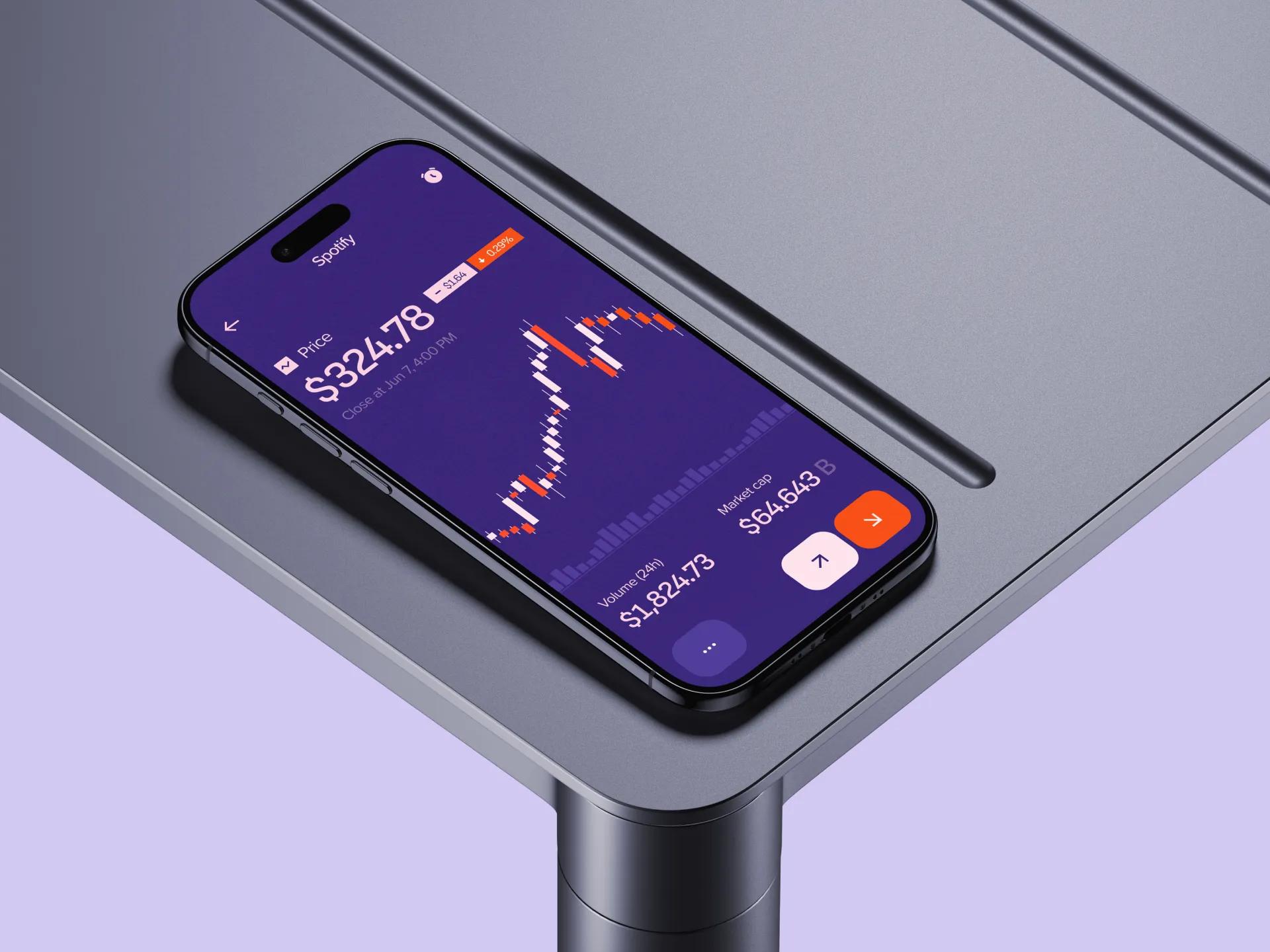
How we built a demo-ready mobile trading app that unifies stocks, mutual funds and bonds in one account for a pre-seed fintech startup, with 100% feature coverage at investor demo.
- AI-Driven Compliance Monitoring Software
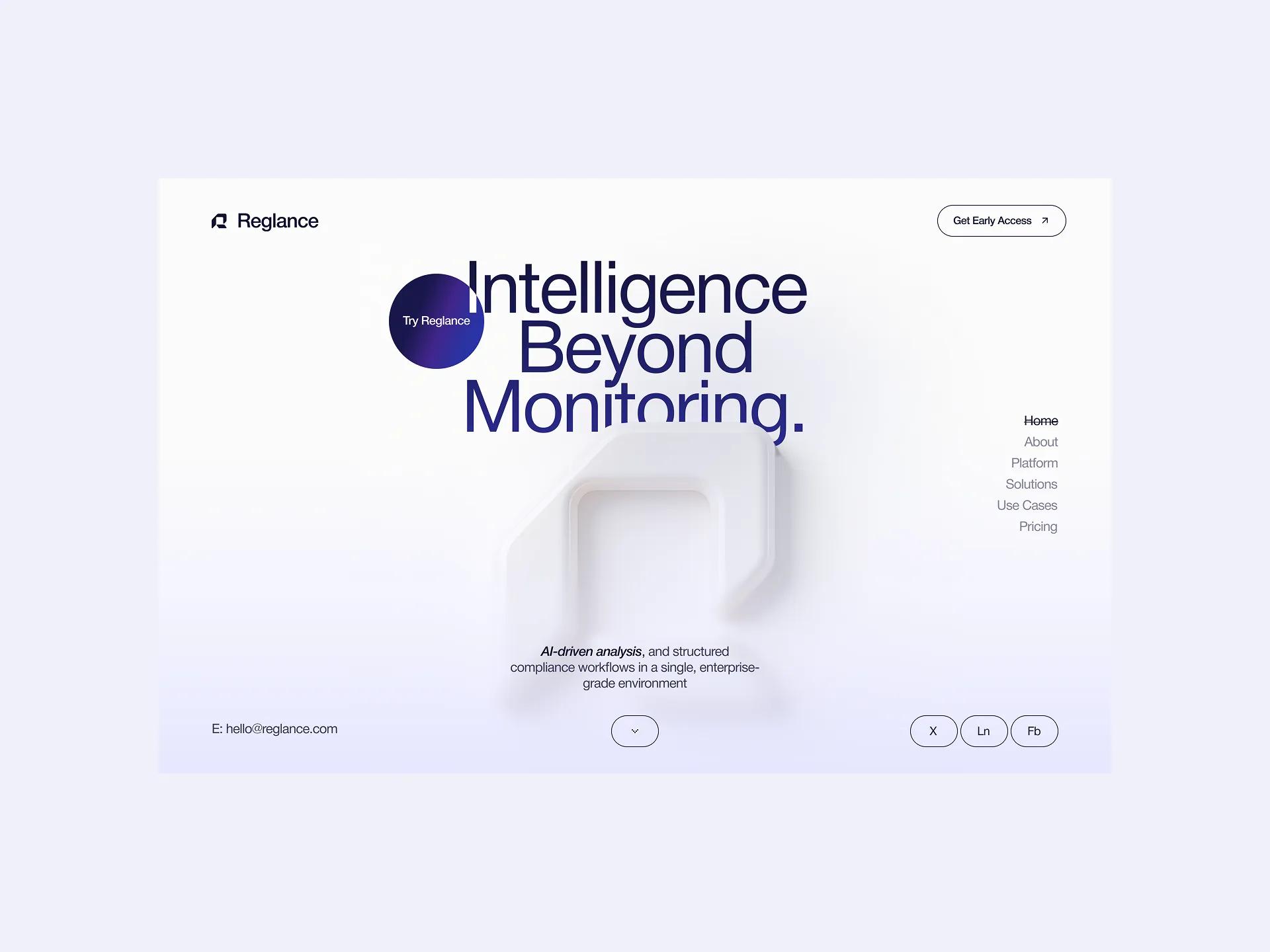
How we built an AI-driven compliance monitoring platform that reduced detection time from 28 days to 3 — covering 80+ sources across 37 jurisdictions and 21 languages for a leading European payment processor.
- Quicked7
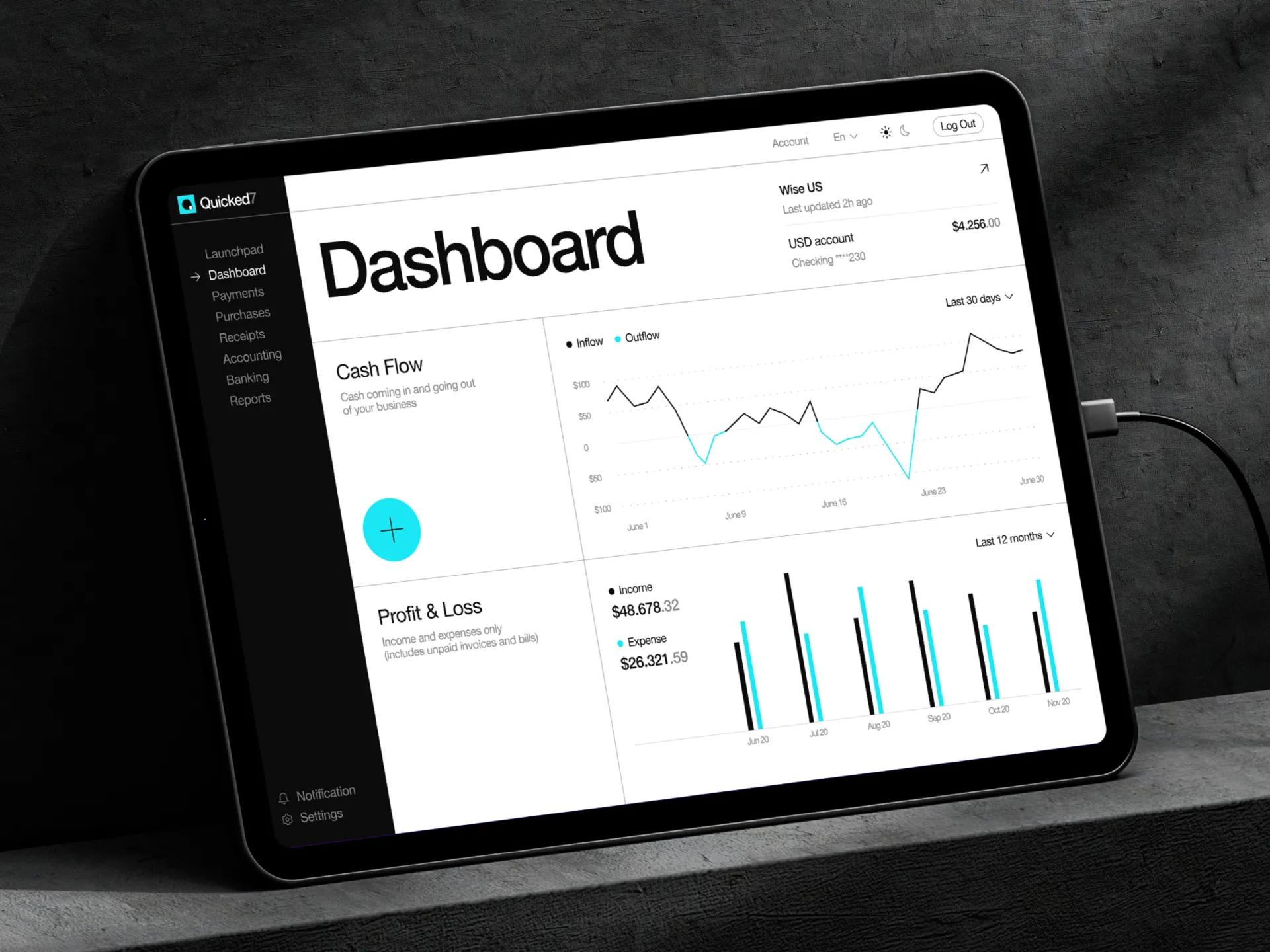
Automated bookkeeping and invoicing platform
UK SaaS platform for freelancers that automates bank reconciliation, invoice generation, and payment tracking without requiring users to understand accounting concepts.

Back-End Development
Process
[✳]Every back-end project is unique. Your performance requirements, data volumes, regulatory constraints, and team structure shape the architecture. Building a system that scales requires understanding those constraints from the start, not discovering them after launch.












Engagement
Models
[✳]Monthly or Quarterly Retainer
The primary engagement model for ongoing back-end development, optimisation, and technical leadership. Provides dedicated team capacity, predictable budgeting, and priority scheduling. Works best for continuous product development, iterative improvements based on production feedback, and long-term partnerships where deep system knowledge drives efficiency.
Fixed Scope Project
Available for clearly defined back-end projects with locked requirements, documented success criteria, and a fixed timeline. Provides cost certainty and clear project boundaries. Typical for new service launches, legacy system replacement, or defined infrastructure upgrades where scope can be agreed upfront.
Time & Materials (Project Boost)
Best suited for short-term development acceleration, specific expertise needs, or variable scope work. Billing is based on actual hours worked with complete visibility into team composition and time allocation. Maximum flexibility to scale capacity as development needs evolve or change direction.
Dedicated Back-End Team
A dedicated engineering team embeds within your organisation, working on back-end development as direct reports to your technical leadership. This model works well for large-scale product initiatives, continuous platform development, or when you need hands-on technical leadership and architecture guidance embedded in your engineering culture.

FAQ
[15]What is your approach to back-end architecture?
Our back-end architecture approach prioritises scalability, reliability, and maintainability from the start. We begin by understanding your constraints—growth projections, expected data volumes, latency requirements, and regulatory compliance needs. From there, we design systems that remain predictable under load rather than collapsing when usage unexpectedly spikes. This means making explicit trade-offs early. Do you prioritise consistency or availability? Should your data model normalise or denormalise? When should caching layer in? These decisions compound over time, so we document them carefully and revisit them as your product evolves. We avoid over-engineering for hypothetical scale, but we also avoid architectures that require complete rewrites when you grow past the initial design assumptions.
What database technology do you recommend?
There's no universal answer. Relational databases like PostgreSQL excel at transactions and complex queries but require careful schema design. Document stores like MongoDB offer flexibility but move complexity into application code. Time-series databases like InfluxDB handle high-volume data streams efficiently but are poor choices for transactional consistency. We evaluate your specific access patterns, consistency requirements, and operational capabilities, then recommend technology that fits rather than technology that's trendy. For most product companies, PostgreSQL remains the pragmatic default. We'll recommend alternatives when they solve a specific problem better.
How do you ensure API stability as the system evolves?
APIs need to evolve without breaking clients. We design versioning strategies that let servers add new fields and capabilities without requiring client updates. We maintain comprehensive API documentation that stays in sync with implementation. We use contract testing to validate that API changes don't break consumers before they reach production. We make breaking changes explicitly, through major version bumps, with deprecation periods that let clients migrate safely. Good API design is boring—it's consistent, predictable, and doesn't surprise anyone.
What's your approach to database performance?
Performance is determined by schema design, not queries. If your schema forces expensive joins, no query optimisation will save you. We design schemas that align with your access patterns, plan indices strategically, and establish baselines so you know when performance degrades. We avoid over-indexing, which slows writes and wastes storage. We monitor query performance in production and surface slow queries and missing indices before they become user-facing problems. We also ensure your development environment lets you reproduce production performance problems locally rather than discovering them after deploy.
How do you approach cloud infrastructure?
Cloud platforms offer immense flexibility and immense opportunity to waste money. We design infrastructure that scales automatically but doesn't scale unnecessarily. We containerise applications so they deploy consistently across environments. We use infrastructure-as-code so system configuration is version controlled and reviewable. We establish cost monitoring and budgets so your cloud bill remains predictable. We favour managed services where they reduce operational burden, but we avoid tight coupling to vendor-specific services that make migration difficult.
What happens if the system needs to scale significantly?
Scaling usually happens in phases. Initial growth is handled by vertical scaling—bigger machines, more memory, faster storage. Horizontal scaling—distributing load across multiple servers—comes next and requires stateless application design and load balancing. Beyond that, you need caching, asynchronous processing, and eventually database sharding. We design systems that can scale through these phases without requiring complete rearchitecture at each step. We also help you understand the operational cost of each scaling decision so you can make informed trade-offs between capability and complexity.
How do you handle security in back-end systems?
Security spans multiple layers. At the network layer, we ensure services only communicate where necessary. At the application layer, we validate all input, sanitise output, and avoid trusting client-provided data. We implement strong authentication and fine-grained authorisation so users can only access data they should. We encrypt sensitive data in transit and at rest. We maintain audit trails so security teams can prove who did what. We also establish incident response procedures and run security reviews to surface vulnerabilities before attackers find them.
What testing approach do you recommend?
Testing is an investment in confidence. Unit tests validate individual functions in isolation. Integration tests ensure services work together correctly. End-to-end tests simulate actual user workflows across the full stack. Load tests surface performance bottlenecks. Chaos tests deliberately break things to discover failure modes before production breaks them accidentally. You won't write tests for everything—that's diminishing returns. You'll write tests for the paths where failure is expensive: payments, data integrity, security boundaries. You'll establish test coverage targets that are meaningful, not arbitrary.
How do you approach monitoring and observability?
You can't operate systems you can't see. We establish structured logging so you can search logs and understand what happened. We capture metrics—request rates, error rates, latency—so you can track system health over time and alert when behaviour changes. We set up distributed tracing so you can follow a request through multiple services and understand where time is spent. We establish dashboards that show the metrics that matter to your business and engineering teams. Monitoring isn't optional or retrospective. It's designed in from the start, not bolted on afterwards.
What programming languages and frameworks do you use?
We pragmatically select technology based on your constraints. For most product work, we've delivered excellent results with Node.js, Python, Go, Java, and Rust. Each has different strengths. Node.js excels at concurrent I/O with a large ecosystem. Python offers rapid development with strong data science libraries. Go is lightweight, fast, and excellent for distributed systems. Java has maturity, extensive libraries, and strong typing. Rust offers memory safety and performance without garbage collection. We choose based on your team's capabilities, the problem you're solving, and the operational environments you're targeting. There's no universal best choice, and we avoid technology decisions driven by personal preference rather than project fit.
How do you handle migrations of existing systems?
Migrating from legacy systems is risky because your users can't tolerate downtime. We run old and new systems in parallel, gradually shifting traffic from old to new. We maintain data consistency between systems using event streams or periodic synchronisation. We establish rollback procedures so we can quickly revert if the new system discovers problems. We also maintain the option to run both systems indefinitely if migration becomes too risky. The migration itself is orchestrated carefully, often with feature flags that let you control which users hit the new code.
What's your approach to documentation?
Documentation is not optional. API documentation needs to stay in sync with implementation. Architecture documentation needs to explain why decisions were made, not just what the decisions were. Runbooks need to guide operators through common failures and recovery procedures. We write documentation as we build, not retrospectively. We use tools that keep documentation close to code so it doesn't drift. We review documentation as rigorously as we review code because out-of-date documentation is worse than no documentation.
How do you approach cost optimisation for back-end systems?
Cost isn't just cloud bills. It's engineering time, operational overhead, and technical debt. We design systems that are efficient to run, with reasonable resource usage that doesn't require constant optimisation. We monitor cloud spending so cost surprises don't happen mid-project. We help teams understand the cost of features—some are cheap to build but expensive to operate, others are expensive to build but cheap to operate. We make that trade-off explicit. We also establish cost budgets so teams know they're approaching limits before they overspend.
What past projects can you reference?
We've delivered back-end systems for trading platforms handling millions of securities, bookkeeping platforms processing thousands of transactions daily, regulatory monitoring systems analysing compliance data across jurisdictions, and fintech platforms managing customer portfolios. We've worked across relational databases, document stores, time-series systems, and purpose-built data warehouses. We've designed APIs that remain stable through years of evolution. We've migrated monoliths to microservices without downtime. We've operated systems with uptime targets exceeding 99.9% and response times below 50 milliseconds. Case studies are available on request.
Do you offer ongoing support after launch?
Yes. Launching is only half the work. Systems degrade over time. Load patterns shift. New features create new bottlenecks. We offer retainer engagements for ongoing optimisation, feature development, and incident response. We establish monitoring and alerting so you know when things break. We maintain runbooks and documentation so your internal team can operate the system confidently. We also help you build internal capability for long-term independence, so the system doesn't depend on external support indefinitely.