Front-End
Development Services
We build interfaces and interactive experiences that work reliably across devices, browsers and real-world network conditions. Our front-end engineers deliver pixel-accurate, performant implementations that hold up in production, not just in controlled dev environments.


Front-End Development
Built for Production Reality
[✳]Most front-end code works fine on the developer's machine and fails predictably in the wild. Happy path implementations that work beautifully in demos but can't accommodate new features. We've learned that front-end development isn't about shipping code first and fixing browser bugs later. It's about understanding the constraints upfront—the devices users actually carry, the network conditions they face, the accessibility standards they depend on—and building interfaces that are performant, resilient and maintainable from the start.
Understanding product requirements means understanding the full scope of user needs. What devices will your application run on. What network conditions will it handle. What accessibility standards matter. Building with performance front-of-mind means thinking about bundle sizes, code splitting and lazy loading as first-class concerns, not afterthoughts. We invest in code quality and component architecture so new features don't become increasingly painful to ship. That's how we deliver interfaces that work reliably, everywhere.

Page load and interaction speed
Achieved by optimising bundle sizes, implementing code splitting and lazy loading, and prioritising critical rendering paths to deliver interactive experiences within 3 seconds across variable network conditions.
Cross-browser and device compatibility
Delivered by rigorous testing across real devices and browsers, catching platform-specific quirks and inconsistencies before they reach production users.
Accessibility and inclusive design
Enabled by building interfaces that work for users across abilities with keyboard navigation and screen reader compatibility, meeting WCAG 2.1 AA standards as standard practice.
Code maintainability and velocity
Driven by building component-based architectures, comprehensive testing, and clear documentation that let teams add features without breaking what already works.
Our Solutions
[✳]We deliver proven front-end solutions to the recurring problems we're asked to solve. Each was built for a specific client need, then refined through repeated production deployment, so the patterns below carry battle-tested component hierarchies, testing strategies, and performance optimisation techniques that new engagements can build on instead of starting from scratch.
Build rich, interactive single-page applications and progressive applications that deliver desktop-quality experiences in the browser. We handle state management, real-time updates, and complex user interactions whilst maintaining performance across devices and maintaining responsiveness on slow networks.


Create and maintain design systems that serve as the single source of truth for product design and component implementation. From atomic components to composite layouts, a mature design system accelerates development, reduces visual inconsistencies, and makes it easier for teams across disciplines to work together.


Analyse, measure and optimise front-end performance using Core Web Vitals and real-world user monitoring. We identify bottlenecks in bundle size, rendering performance, and network utilisation, then implement targeted improvements that make the difference between a sluggish product and one users want to use.


Build interactive features that respond instantly to user input and server-side changes. WebSocket integration, state synchronisation, and efficient rendering strategies create experiences where the interface feels connected to the backend, not delayed by network latency.


Create responsive designs that work beautifully on phones and tablets, then add progressive enhancements like offline access, home screen installation, and native app-like interactions. Progressive web apps deliver app-like experiences without forcing users to download and install native binaries.


Where We Work
)Front-end development services deliver measurable impact across industries where user experience and interface reliability matter. Our clients range from startups building from scratch to established companies modernising existing platforms.
- Financial Services & Banking
- Fintech & Payments
- Healthcare & MedTech
- SaaS & Enterprise Software
- Insurance & Insurtech
- Private Equity & Venture Capital
- Retail & E-Commerce
- Real Estate & PropTech
- Manufacturing & IoT
- Developer Platforms
- Education & E-Learning
- Media & Publishing
Case Studies
[3]- Branding for Digital Bank

A complete visual identity system — logo, palette, typography, illustration language, and an 80-template application kit — built for a pre-launch European digital bank ahead of its Series A round.
- Trading App
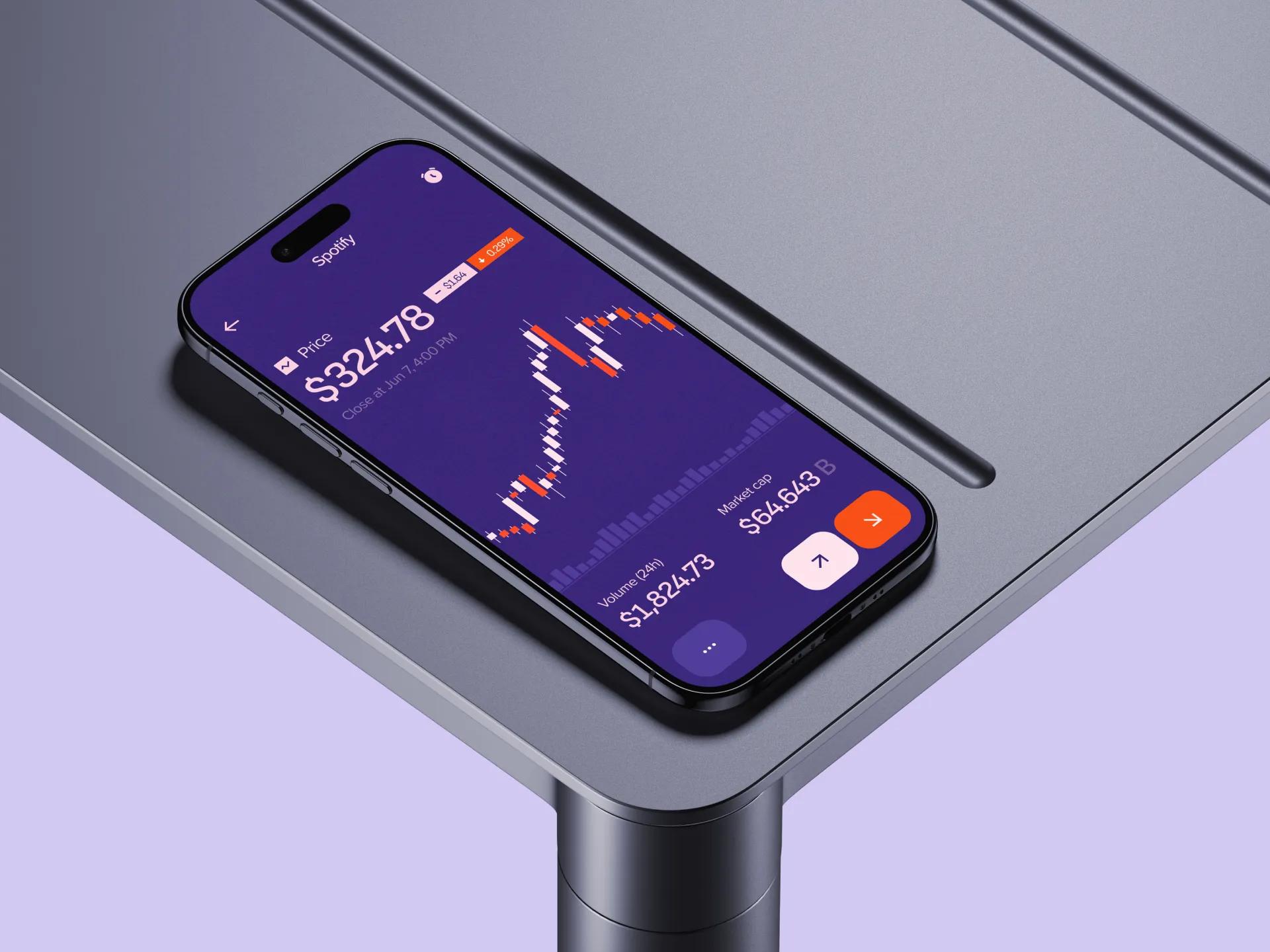
How we built a demo-ready mobile trading app that unifies stocks, mutual funds and bonds in one account for a pre-seed fintech startup, with 100% feature coverage at investor demo.
- Vorx
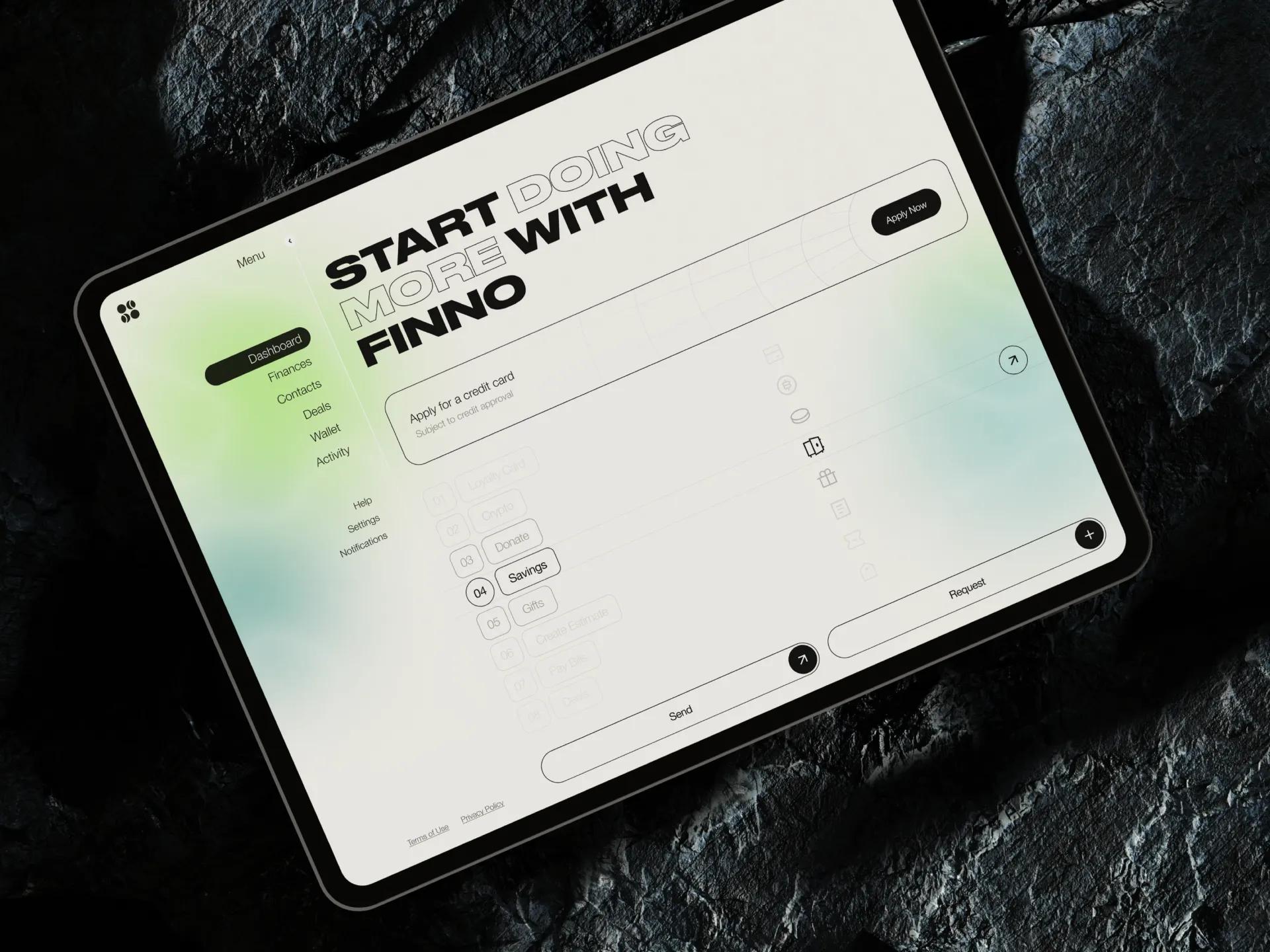
Personal finance account aggregation app
US personal finance platform that unifies bank accounts, creates intelligent budgets, and tracks financial goals through open banking APIs and resilient account-aggregation architecture.

Building Interfaces
That Scale
[✳]Every front-end project has unique constraints and requirements. Target devices, network conditions, performance budgets, accessibility standards, existing design systems—none of it matches a template. Building interfaces that work across that full spectrum requires understanding constraints upfront, not discovering them in production.












Engagement Models for Front-End Development
[✳]Retainer (Monthly or Quarterly)
The primary engagement model for ongoing front-end development, feature delivery, and performance optimisation. Provides dedicated team capacity, predictable budgeting, and priority scheduling. Works best for continuous development work, iterative improvements based on user feedback, and long-term partnerships where deep product knowledge drives efficiency.
Project (Fixed Scope)
Available for well-defined front-end projects with clear success criteria and design deliverables. Provides cost certainty and schedule clarity. Concludes with delivered code, documented architecture, and handoff to your team for ongoing maintenance.
Project Boost (Time and Materials)
Best suited for short-term front-end acceleration, targeted expertise needs, or variable scope projects. Billing is based on actual hours worked with complete visibility into team composition and time allocation. Maximum flexibility to scale capacity as project needs evolve.
Dedicated Front-End Team
A senior front-end engineer and supporting specialists embed within your team, working on feature development, architecture decisions, and performance optimisation as a direct report to your technical leadership. This model works well for complex products, rapid iteration, or when you need hands-on guidance on technology choices and architectural patterns.

FAQ
[12]What types of front-end projects do you take on?
We specialise in complex, user-facing applications where performance, accessibility, and cross-device compatibility matter. Single-page applications, progressive web apps, responsive designs, and interactive dashboards are our bread and butter. We're comfortable with projects that have challenging performance requirements, complex state management, or high accessibility standards. We typically recommend against projects where the frontend is genuinely trivial—a simple marketing site or static content doesn't need our level of rigour. We're most efficient where the complexity justifies investment in architecture and testing.
How do you approach the UI/UX design collaboration?
We work closely with designers, but we're not designers. Our role is to translate design intent into code that works across devices and browsers, raises realistic performance questions, and flags feasibility issues early. We partner with design to validate that mockups account for realistic network conditions, edge cases, and content variations. We build interactive prototypes to validate interactions before full implementation. If your team needs design work, we connect you with specialists. If you have designers on staff, we embed in their workflow to catch cross-device inconsistencies or accessibility issues before they become expensive to fix.
What technologies and frameworks do you work with?
We're pragmatic about technology choices. We work with React, Vue, Angular, Svelte, and vanilla JavaScript depending on what your project actually needs. On the styling side, we're comfortable with CSS-in-JS, utility-first frameworks like Tailwind, traditional CSS modules, and component library patterns. We work with whatever backend technologies your team uses—Node.js, Python, Go, Java, whatever. We evaluate options against your constraints—performance budgets, team skills, ecosystem maturity—rather than defaulting to whatever's trending. We're also comfortable inheriting existing codebases and modernising them where it makes sense.
How do you approach performance optimisation?
We measure before we optimise. Core Web Vitals—Largest Contentful Paint, First Input Delay, Cumulative Layout Shift—give us concrete targets. Real-world user monitoring data tells us where users actually experience slowness, not just what the lab tests show. We then identify bottlenecks: bundle size, rendering performance, network utilisation. Solutions vary. Sometimes it's code splitting and lazy loading. Sometimes it's algorithmic optimisation or reducing API calls. Sometimes it's aggressive caching. We iterate until performance meets targets without sacrificing code clarity or maintainability.
What's your approach to testing and quality assurance?
We build testing into development from day one, not as an afterthought. Unit tests cover component logic and behaviour. Integration tests validate that components work together correctly. End-to-end tests validate critical user journeys. We aim for meaningful coverage—tests that catch real bugs, not just line coverage numbers. We also run manual testing across real devices and browsers because automated tests alone miss platform-specific quirks. Accessibility testing checks keyboard navigation, screen reader compatibility, and colour contrast. Performance testing tracks Core Web Vitals as part of continuous integration.
How do you ensure cross-browser and device compatibility?
We test on real devices using services like BrowserStack when necessary. We don't just test Chrome on a laptop; we test Safari on iPhones, Chrome on Android, Edge on Windows. We catch platform-specific bugs early—CSS rendering quirks, JavaScript engine differences, touch input handling. We also follow progressive enhancement principles: core functionality works everywhere, enhanced experiences layer on top where supported. We maintain a device and browser compatibility matrix as part of release notes.
What's your approach to accessibility?
Accessibility isn't an afterthought or a compliance checkbox. We build it in from the start. We follow WCAG 2.1 AA standards as a baseline. Keyboard navigation must work throughout the interface. Screen readers must understand the structure and announce changes. Colour contrast must meet standards. Form labels must be properly associated. We test with actual assistive technology, not just automated scanners. We educate the team on accessibility patterns so they can maintain standards during future development.
How do you integrate front-end with backend systems?
We design clear API contracts with your backend team before implementation starts. We handle authentication, error handling, data transformation, and fallback logic that make the front end resilient to backend latency or failures. We build API client libraries that abstract away low-level details. We set up monitoring to catch API integration issues early. We document integration points thoroughly so future developers understand the contract. If your backend is changing, we plan for that rather than assuming a stable API.
What's the process if performance targets or requirements change mid-project?
Requirements shift. Network conditions change. New devices launch. We build feedback loops into development so we catch issues early rather than discovering them at launch. We measure continuously against agreed performance budgets and accessibility standards. If something needs to change, we discuss trade-offs transparently: shipping a new feature might mean trading off on performance or accessibility, and we flag those explicitly so the product team can decide. We avoid surprise scope creep by keeping requirements visible throughout the project.
How do you measure business impact from front-end development?
We track metrics that matter to the business: user conversion, engagement time, bounce rate, support tickets related to broken features, and user satisfaction surveys. On the technical side, we track Core Web Vitals, accessibility compliance, test coverage, and code maintainability metrics. We establish baseline metrics before development, then measure improvements post-launch. We also measure velocity and development efficiency—a good front-end architecture should make it faster to add features over time, not slower. We review these metrics regularly and adjust priorities based on what's working.
How do you choose the right front-end development partner?
Look for a team with hands-on experience shipping complex products, not just theoretical knowledge of frameworks and libraries. Ask for examples of work across different industries and devices. Ask what went wrong and how they handled it. Find a partner who thinks about performance and accessibility as first-class concerns, not add-ons. Look for clear communication—a good partner explains trade-offs, flags risks early, and isn't afraid to recommend against an approach that won't work. Engagement flexibility matters too. A partner who offers fixed-price work, retainers, and dedicated team models gives you options to match your stage and budget.
What are the business benefits of investing in front-end quality?
Better user experience directly drives conversion, engagement, and retention. A fast, responsive interface feels professional and trustworthy. Users spend more time in the product, complete more transactions, and recommend it to others. On the cost side, a well-architected front end is cheaper to maintain. New features ship faster. Bugs are caught earlier. The codebase doesn't become increasingly fragile as it grows. Teams with good testing and code quality stay more productive over time. You also reduce the risk of the spectacular failure where a single bug or poor performance takes down critical functionality. Accessibility and cross-device compatibility aren't moral imperatives alone—they expand your addressable market and reduce the risk of legal exposure.