MLOps
Service
We build the operational infrastructure that takes machine learning models from experiment to reliable production. From automated training pipelines and model versioning to real-time monitoring tools, drift detection and retraining workflows, our MLOps practice makes sure your AI investments actually deliver consistent value over time. Through rigorous process design and hands-on implementation, we build ML operations that scale with your model portfolio.


ML Operations Built
for Production Reality
[✳]Most machine learning deployments fail in two ways: they work well at first but degrade silently as data distribution changes happen, or they need constant manual intervention to stay performant. Real MLOps is about building infrastructure that detects degradation through continuous optimisation, retrains models automatically, and maintains consistency across your model portfolio. Our approach starts by understanding what your models do, how they're used, and what degradation means for your business.
We build mlops pipelines that are reproducible and automated, not dependent on individual data scientists' notebooks. We establish model versioning and lineage tracking so you always know what's in production. We implement model monitoring infrastructure and build retraining workflows. We work with tools like kubeflow, mlflow, and platforms across aws, azure, and google cloud, always picking technology-agnostic solutions that fit your stack rather than forcing you into a vendor lock-in.

Reduction in manual model operations
Automated ci/cd pipelines retrain models on new data, validate performance metrics, and handle automated deployment without manual intervention or data scientist involvement.
Model performance monitoring coverage
Continuous monitoring of predictions, input data distributions, and business outcomes using real-time monitoring tools and drift detection across the entire model portfolio.
Data pipeline reliability improvement
Monitored, versioned, validated pipelines with data preprocessing and quality data checks ensure consistent, reproducible training and serving workflows.
Operational visibility and governance maturity
Model registries, governance models, and audit trails tracking production models provide complete visibility into model lineage, performance, and compliance.
Our Solutions
[✳]We deliver proven MLOps solutions to the infrastructure and operational challenges we're asked to solve. Each reflects battle-tested patterns from production deployments across multiple industries and model portfolios. These aren't hypothetical architectures — they're systems that run critical models at scale, delivering reliable predictions and governance that teams can depend on.
ML pipelines that fetch data, execute scalable training, validate model performance, and deploy to production. Triggered on schedules or data changes. Process automation, traceability and reproducibility ensure every model deployment is auditable and repeatable, eliminating notebook-based operations and enabling continuous retraining at scale.


Monitors predictions, input data distributions, performance metrics continuously. Detects data drift, model drift using real-time monitoring tools. Alerting based on business impact ensures degradation is caught before users encounter poor predictions, enabling proactive retraining and maintenance rather than reactive firefighting.


Feature pipelines for training and serving with experiment tracking and versioning. Prevents training-serving skew. Centralized data management ensures the same features used during training are available at inference time, eliminating a class of production bugs and supporting reproducible model development.


Central registry of all models tracking production status, performance, training data, lineage. Audit trails, approval workflows, regulatory compliance, data governance provide complete control over what's in production and why. Governance models enforce policy and enable compliance audits with full historical traceability.


Safe deployment with A/B testing against production baselines, canary deployments. Reduces time to market while protecting against regressions. Deployment automation integrates safely with monitoring and rollback mechanisms, ensuring new models can be validated in production without impacting existing users.


Where We Work
)Our MLOps services support machine learning at scale across industries where models directly impact business decisions and operations. The infrastructure challenges are similar, but the consequences of model degradation and the regulatory requirements differ significantly by context.
- Asset Management
- Audit Firms
- Payment Processors
- Financial Services
- Fintech
- Healthcare
- Insurance
- Risk Management
- Compliance
- Portfolio Management
Case Studies
[3]- Branding for Digital Bank
A complete visual identity system — logo, palette, typography, illustration language, and an 80-template application kit — built for a pre-launch European digital bank ahead of its Series A round.
- Trading App

How we built a demo-ready mobile trading app that unifies stocks, mutual funds and bonds in one account for a pre-seed fintech startup, with 100% feature coverage at investor demo.
- AI-Driven Compliance Monitoring Software
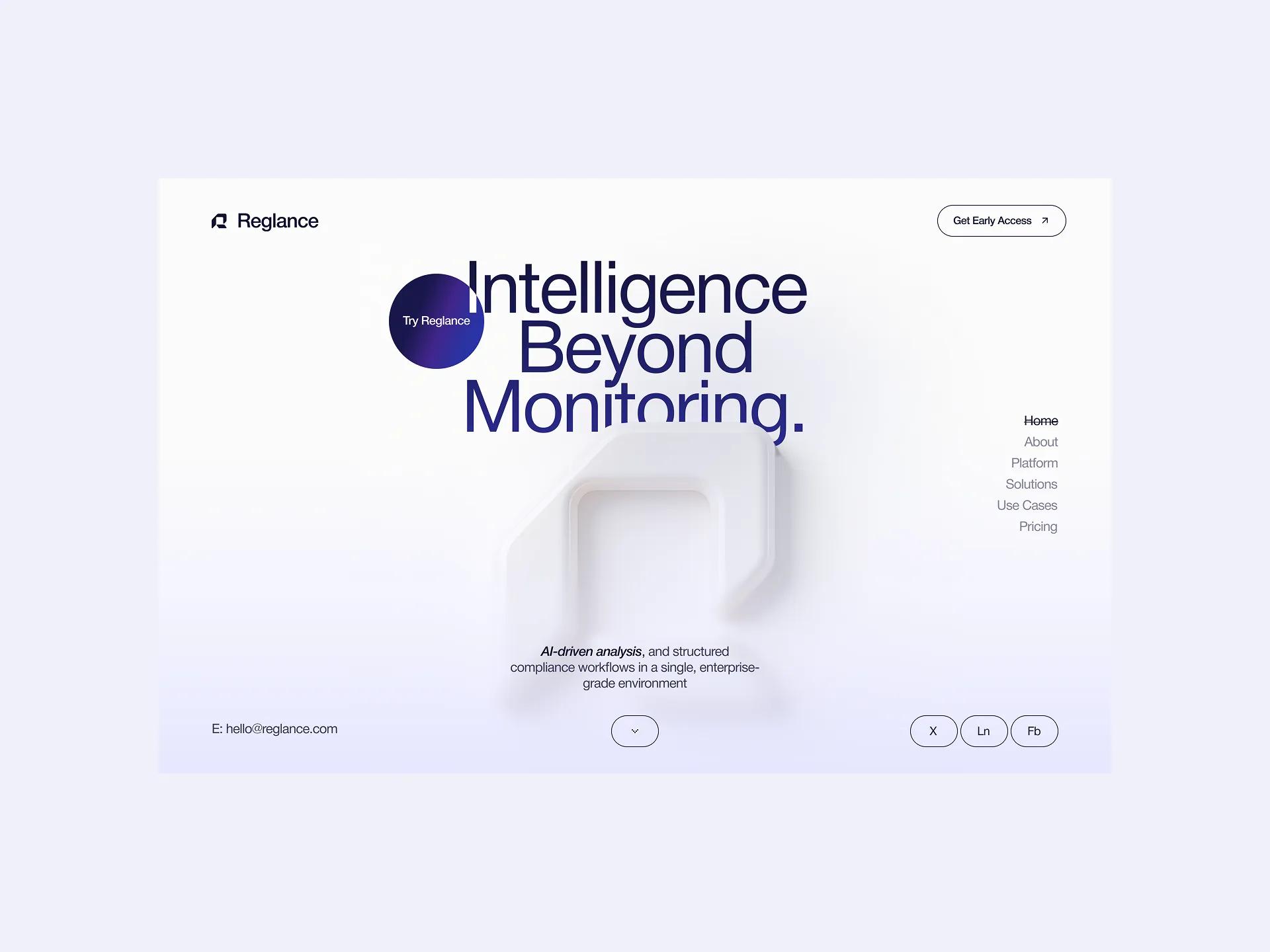
How we built an AI-driven compliance monitoring platform that reduced detection time from 28 days to 3 — covering 80+ sources across 37 jurisdictions and 21 languages for a leading European payment processor.

MLOps Infrastructure
Design and Implementation
[✳]Every ML operation is unique. Your models have specific performance characteristics, your data pipeline has particular constraints, and your definition of acceptable degradation doesn't match anyone else's. Effective MLOps requires understanding your specific model portfolio, not applying generic frameworks or assuming that a larger monitoring platform will solve operational problems.












Engagement
Models
[✳]Monthly or Quarterly Retainer
Ongoing MLOps development and optimisation across your model portfolio. Provides dedicated capacity for monitoring improvements, pipeline refinement, governance enhancements, and hands-on support as new models enter production. Works best for continuous ML operations maturation and long-term partnerships where team knowledge accumulates over time.
Fixed Scope MLOps Project
Clearly defined projects for monitoring implementation, training pipeline deployment, or governance framework establishment. Provides cost certainty with defined scope, timeline, and deliverables. Works well for organisations ready to tackle a specific operational pain point with a bounded, end-to-end engagement.
Time & Materials (Project Boost)
Short-term MLOps acceleration for specific infrastructure work, proprietary data systems, or variable scope projects. Billing based on actual effort with complete visibility into team composition and time allocation. Provides flexibility to scale capacity as operational needs emerge and evolve.
Embedded MLOps Engineer
Senior MLOps engineer embeds within your data science or engineering team, reporting to technical leadership. Brings devsecops practices, mlops strategy and consulting, and hands-on execution of pipelines and monitoring. Works best for organisations building substantial ML operations in-house and needing guidance on architecture and implementation.

FAQ
[8]How do you handle model monitoring, versioning, and maintenance?
Model monitoring infrastructure tracks three distinct signals: input data distributions (to catch data drift), prediction distributions (to catch model drift), and outcome-based metrics (to catch business impact drift). We implement real-time monitoring tools that surface these signals continuously rather than waiting for periodic manual checks.
Versioning is handled through model registries that track every model in production: what training data was used, what parameters were tuned, what performance it achieved on validation data, and when it was deployed. Lineage tracking documents which features feed which models, so if a feature pipeline changes, you know exactly which models are affected.
Maintenance is structured around a regular retraining cadence: scheduled retraining on new data, triggered retraining when monitoring detects performance degradation, and continuous optimisation of model parameters. Validation gates ensure that new model versions meet performance baselines before they reach production users. This approach requires collaboration of data experts, data scientists, and platform engineers, but distributes the operational burden across the team rather than depending on individual heroics.
How do your MLOps services support scalability, adaptability, and collaboration?
Scalability comes from automation. Mlops pipelines handle retraining at scale without manual intervention. Feature pipelines execute across aws, azure, or google cloud without breaking. Model serving scales from batch processing to real-time serving, and from single models to edge computing and iot scenarios where models run on low-power devices.
Adaptability means technology-agnostic solutions. We work with kubeflow and mlflow regardless of cloud provider. We evaluate dataiku, low-code/no-code tools, and automl platforms when they fit, rather than forcing custom infrastructure when packaged solutions work better. Agentic workflows can orchestrate complex multi-model systems.
Collaboration is enabled through centralized infrastructure. Model registries, experiment tracking, and shared feature stores mean data scientists, engineers, and ML operations teams work from the same source of truth rather than in silos. Feedback loops surface production issues back to the data science team, and governance ensures compliance without slowing iteration.
What is your approach to data management and governance?
Data quality is the foundation. We implement data quality checks at pipeline ingestion points so bad data doesn't poison models. Data preparation is automated and versioned alongside models. Data security and privacy compliance are built into pipelines — we implement access management to control who can access training data, enforce data governance policies, and maintain lineage to prove regulatory compliance.
Data governance frameworks establish who owns which models, who can deploy changes, what approval workflows are required, and how decisions are audited. Model development best practices are documented and enforced through infrastructure. Cost analysis and tools like cloudhealth ensure that pipelines and serving infrastructure stay within budget while delivering required performance.
How do you integrate MLOps with DevOps and modern tooling?
MLOps is an extension of DevOps practice. ML infrastructure requirements are handled the same way as application infrastructure: through version control, automated testing, staged deployment, and continuous delivery. Ml lifecycle management mirrors software lifecycle management — from development environments through staging to production.
Automated deployment using ci/cd pipelines handles model deployment the same way application code is deployed. Aws step functions, kubeflow, or mlflow handle orchestration depending on your infrastructure choice. Devsecops practices ensure data management and security are built in from the start, not bolted on later. Data preprocessing and feature engineering are treated as infrastructure, not notebook experiments.
How do you approach automation and operationalisation of ML models?
Operationalisation starts with mlops pipelines that execute the entire ML lifecycle: data fetch, feature engineering, training, validation, deployment. These aren't notebook-based experiments — they're reproducible, auditable, automated workflows. Ml pipelines are triggered by schedules, data volume thresholds, or performance signals rather than manual intervention.
Automated ci/cd pipelines validate every model change before it reaches production. Automated deployment reduces time to market and eliminates manual deployment errors. Automated self-service machine learning enables data scientists to iterate rapidly without platform engineering dependencies. Automl and agentic workflows can handle routine optimization work, freeing data scientists for higher-value problems.
End-to-end automation provides traceability: every model in production has documentation of how it was trained, what data was used, what features were selected, and what performance it achieved. Reproducibility means another data scientist can retrain the same model from scratch and get identical results, which is essential for compliance, debugging, and knowledge transfer.
What business value and ROI can we expect from MLOps?
The business case for MLOps is strong but often underestimated. Architecture assessment and mlops strategy and consulting identify high-impact improvement areas. Model performance consistency means models don't degrade silently — they stay accurate and reliable.
Process automation eliminates repetitive manual work, freeing data scientists to focus on model development rather than operations. Cost-effectiveness comes from automated pipeline and infrastructure optimisation, avoiding unnecessary compute spend. Time to market accelerates when deployment automation removes the manual bottleneck between model development and production.
Cross-team collaboration means data science, engineering, and operations teams work together rather than throwing models over the wall. Compliance becomes routine — governance is built into infrastructure, so regulatory requirements are met without special projects. Innovation velocity increases when teams can iterate rapidly on production models without operational risk.
Talent development is often overlooked: strong MLOps infrastructure attracts experienced data scientists and ML engineers because it removes the operational drudgery that makes teams burn out.
How do you address security, compliance, and responsible AI?
Security starts with access management: controlling who can access training data, who can modify models, and who can deploy changes. Data governance and data privacy are embedded in data pipelines through encryption, masking, and access controls. Regulatory compliance is tracked through audit trails that prove what data was used, who trained each model, and when it was deployed.
Model governance frameworks establish the rules: which models require testing, what approval workflows are required, and how deployment decisions are documented. Explainability and model interpretability are important for high-stakes decisions — we implement tools that explain model predictions in terms domain experts understand.
Fairness and bias assessment are part of model evaluation. Ethical considerations are documented, and responsible AI frameworks are applied during model selection and evaluation. Transparency is key — models are treated as code subject to review, testing, and audit trails rather than black boxes that nobody can understand.
Industry standards and organizational policies are encoded into MLOps infrastructure, so compliance becomes part of the development process rather than a separate gate that slows iteration.
How are your MLOps solutions tailored to each customer?
We start with an initial consultation to understand your current ML operations, your model portfolio, and your specific challenges. Work with proprietary data systems is treated carefully — data never leaves your infrastructure, and we design pipelines that integrate into your existing security and compliance frameworks.
Solutions are customer-centric, not vendor-centric. We evaluate kubeflow, mlflow, cloud platforms, and proprietary tools, choosing what fits your stack. Modular, platform-based approaches avoid lock-in and keep infrastructure flexible as your needs change.
Integration into existing workflows means we build on infrastructure you already have rather than forcing you to adopt new platforms. Security hardening and auditing are customized to your compliance requirements. Regulatory compliance requirements shape architecture decisions, and we build governance frameworks that fit your industry (finance, healthcare, etc.) rather than applying generic governance templates.