AI and LLM
Integration Service
We integrate large language models directly into your existing products and workflows, turning raw AI capability into reliable business features. We handle everything from API integration and custom prompt engineering to evaluation frameworks and ai governance, making sure the models we deploy behave predictably and stay within scope. Through structured testing and continuous monitoring, we build LLM-powered features that deliver consistent value at production scale, not just in a controlled sandbox where edge cases never appear.


LLM Integration Built
for Production Reliability
[✳]Most LLM implementations fail in one of two ways: they work perfectly in demos but fail silently in production, or they produce outputs so unpredictable that teams stop trusting them. We've learned that integration isn't about deploying the latest model. It's about building evaluation frameworks, monitoring systems, and feedback loops that catch degradation before users do.
Our approach starts with a rigorous ai readiness assessment of your use case and data. We evaluate data quality and availability, review your data sources, and check for integration with legacy systems before writing a single line of code. We build working prototypes that include not just the model integration, but the fallback logic, prompt engineering, and cost optimisation that makes deployment sustainable. If an LLM isn't the right answer for your workflow, we tell you before you've invested in integration that won't deliver value.

Reduction in processing time
Achieved by deploying fine-tuned models integrated into existing workflows, enabling process automation and autonomous process execution that eliminates manual steps and reduces time spent on repetitive interpretation and categorisation tasks.
Accuracy of model outputs
Delivered through rigorous evaluation frameworks, bias mitigation techniques, and continuous monitoring that track performance across real-world data, ensuring degradation is caught and addressed before users encounter errors.
System reliability and uptime
Enabled by building resilience into integration architecture, including fallback logic, rate limiting, ai security controls, and cost management that keep models from being exhausted or becoming economically unsustainable.
Reduction in integration complexity
Driven by careful API selection, streamlined data pipelines, and prompt engineering that works with your existing infrastructure, avoiding custom architecture that locks your team into specific vendors or models.
Proven LLM Integration Solutions
to the Challenges We're Asked to Solve
[✳]AI integration supports a wide range of applications and solutions, from chatbots and predictive analytics to generative AI, workflow automation, and industry-specific implementations. The use cases below reflect the problems clients bring to us most often, each built with the same evaluation and monitoring discipline we apply across every deployment. These aren't hypothetical use cases — they're production systems that handle real data and serve real users every day.
Consumes long documents, transcripts, and conversations, extracting key points and generating executive summaries that respect your domain-specific context and terminology. Deployed with evaluation metrics that track summary accuracy and completeness, delivering data-driven insights your team can act on.


A knowledge assistant and customer service ai agent that fields questions about your product, policies, or operational procedures. It retrieves relevant context from your documentation using NLP models and generates answers in real time, with fallback to human escalation when confidence is low. Conversational analytics track usage patterns and surface gaps in your knowledge base.


Reads unstructured text like emails, documents, and support tickets, then extracts structured data aligned with your schema through data integration with your existing systems. It handles edge cases, flags anomalies, and maintains audit trails of extraction decisions, supporting everything from claims processing to underwriting workflows.


Translates, localises, and adapts content across languages while preserving brand voice and domain-specific terminology. Evaluation includes both linguistic accuracy and cultural appropriateness, enabling personalized customer experiences across markets.


Deploys generative ai algorithms and advanced algorithms for real-time analytics for ai applications, including real-time fraud detection and prevention, case analysis and prediction, and risk assessment. These models process high-volume transaction streams and flag anomalies before they become costly, with predictive insights that improve over time through fine-tuning.


Our Expertise
)AI integration services benefit a wide range of industries. The specific applications vary, but the underlying pattern is the same: repetitive, data-heavy processes that get faster and more accurate with the right model behind them.
- Asset Management & Investment Funds
- Personal Finance
- Private Equity & Venture Capital
- Banking & Financial Services
- Audit & Assurance
- Governance, Risk & Compliance
- Internal Workflows
- Fintech & Payments
- Wealth Management
- Corporate Finance
- Treasury & Liquidity Management
- Risk & Fraud Management
Case Studies
[3]- Location-based CRM

Location-aware CRM and analytics platform
US data analytics company unified geospatial intelligence, CRM, and social-listening data into a location-aware platform for food and retail chains to understand customer movement and competitive activity.
- AI-Driven Compliance Monitoring Software
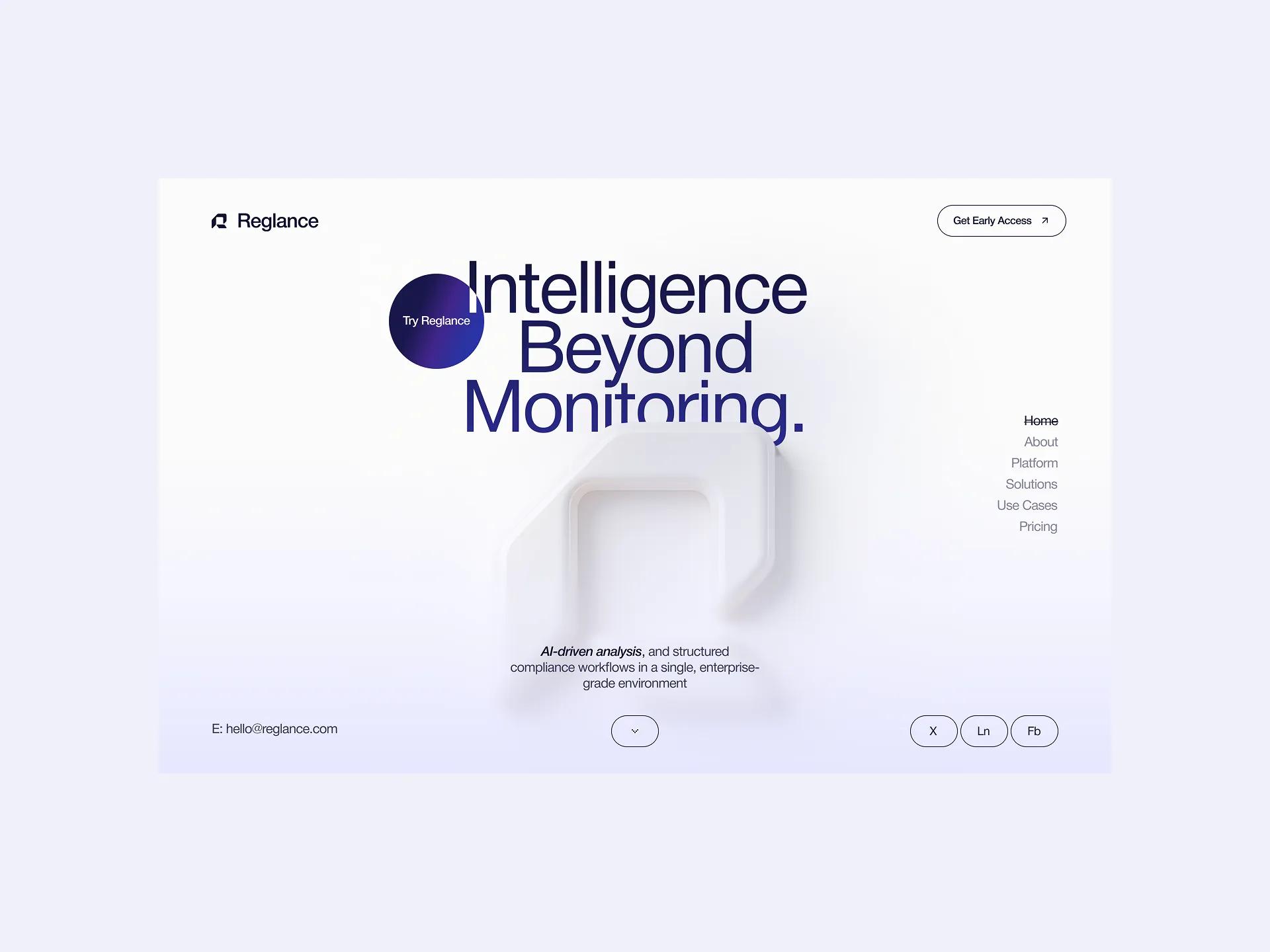
How we built an AI-driven compliance monitoring platform that reduced detection time from 28 days to 3 — covering 80+ sources across 37 jurisdictions and 21 languages for a leading European payment processor.
- Quicked7
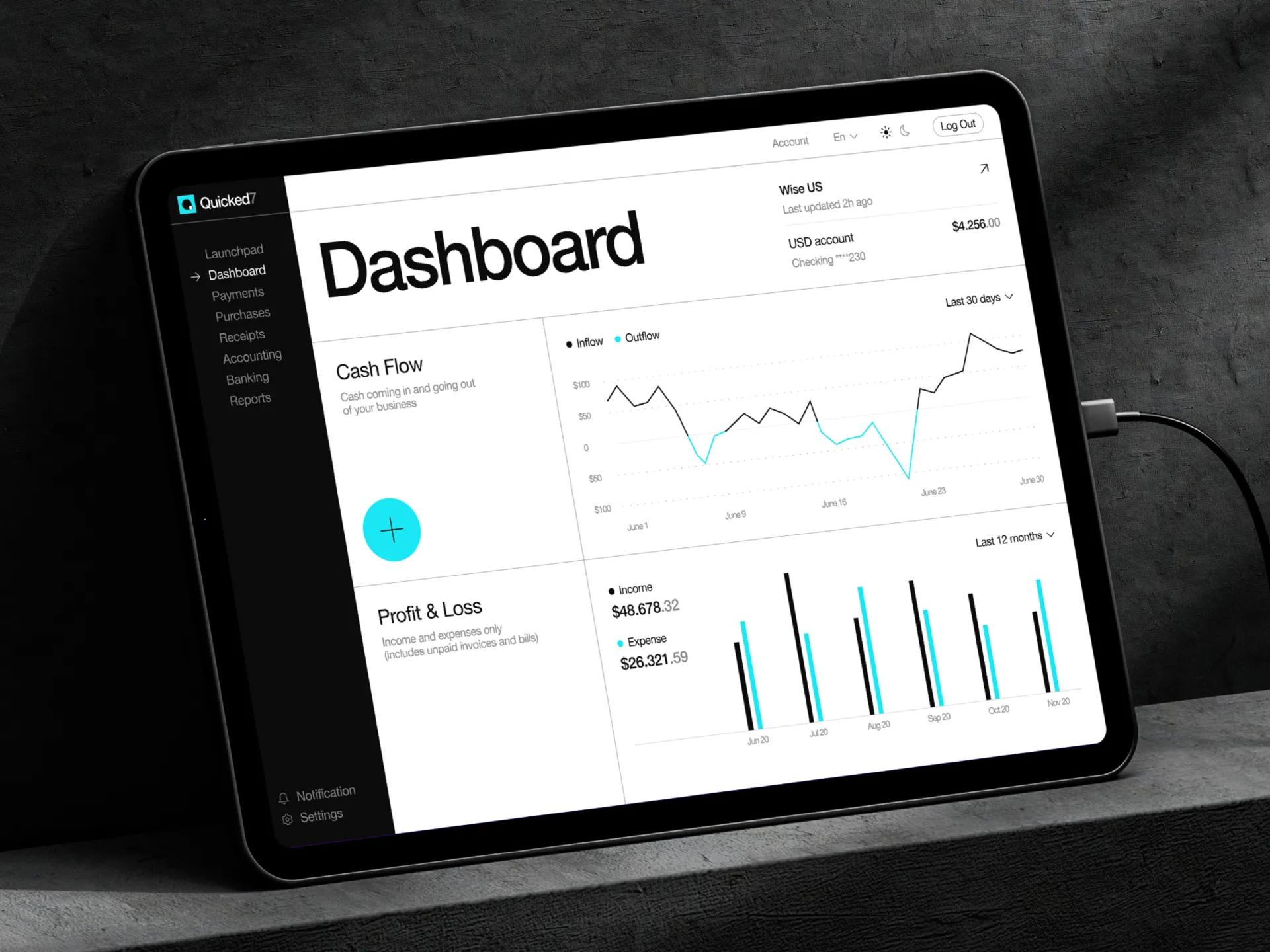
Automated bookkeeping and invoicing platform
UK SaaS platform for freelancers that automates bank reconciliation, invoice generation, and payment tracking without requiring users to understand accounting concepts.

From Integration to Trusted Performance:
Building LLM Features That Scale
[✳]Every LLM integration is unique. Your domain has specific terminology, your workflows have particular constraints, and your definition of "good output" doesn't match anyone else's. Building integration that actually works requires understanding your specific context, not applying generic prompt templates or assuming that a larger model will solve reliability issues. We bring production experience from dozens of LLM deployments across industries like finance, healthcare, retail, and manufacturing.












Engagement Models for
LLM Integration
[✳]Monthly or Quarterly Retainer
The primary engagement model for ongoing LLM integration development and optimisation. Provides dedicated team capacity, predictable budgeting, and priority scheduling. Works best for continuous integration work, iterative improvements based on production feedback, and long-term partnerships where deep product knowledge drives efficiency.
Fixed Price Proof of Concept
Available exclusively for clearly scoped PoC engagements with defined success criteria and evaluation frameworks. Provides cost certainty while validating whether LLM integration will deliver measurable value for your specific use case. Concludes with documented results, performance metrics, and implementation roadmap.
Time & Materials (Project Boost)
Best suited for short-term integration acceleration, specific expertise needs, or variable scope projects. Billing is based on actual hours worked with complete visibility into team composition and time allocation. Maximum flexibility to scale capacity as integration needs evolve.
Embedded LLM Engineer
A senior LLM engineer embeds within your team, working on model integration, evaluation, and optimisation as a direct report to your technical leadership. This model works well for ongoing LLM initiatives, rapid experimentation, or when you need hands-on guidance on model selection and integration decisions.

FAQ
[7]What is our approach to AI integration?
Our AI integration consulting follows a phased implementation approach that draws on principles from the CRISP-DM framework, adapted for production LLM and generative AI applications. It starts with planning: we assess your use case, define success criteria, and handle data import from the systems your team already uses. We evaluate your computing infrastructure setup and make recommendations based on what the project actually needs, not what looks impressive on a slide.
From there, we move into algorithm selection and development. We take a step-by-step approach to integrating AI solutions into business workflows that covers planning, development, testing, deployment, and ongoing support. Every engagement starts with understanding the problem before picking the technology.
During planning, we map your existing workflows, identify where AI can remove friction, and scope the work so nothing gets built on assumptions. Development is where we build and test custom AI models or configure pre-trained ones, run algorithm selection against your actual data, and set up the computing infrastructure to support production workloads. Data import pipelines are designed to work with your existing systems, not replace them.
Before anything goes live, we run structured testing through evaluation harnesses that simulate real usage, including edge cases and failure scenarios. Deployment follows a phased implementation approach so we can validate performance at each stage rather than flipping a switch and hoping for the best.
How do we handle AI integration readiness assessments?
Before we write any code or pick any model, we run a structured ai readiness assessment to figure out where your organisation actually stands. The goal is to evaluate your preparedness for AI integration and identify the gaps and opportunities that will shape the project.
We start with an infrastructure evaluation, looking at your current systems, data quality, and integration with legacy systems to understand what can support AI workloads today and what needs attention. This isn't a checkbox exercise. We dig into how data actually flows through your business, where it breaks down, and whether the systems you rely on can handle the additional load that AI integration demands.
From there, we assess business process alignment. AI works best when it's mapped to workflows that are well understood and consistently followed. If the process itself is broken or inconsistent, adding a model on top just automates the mess. We flag these issues early through our ai integration consulting work so you can decide what to fix before building.
Readiness assessments also cover your team's capacity for ai model deployment and optimization after launch. We look at whether you have the internal capability for model performance monitoring, or whether that's something we need to build into the engagement. The same goes for testing and evaluation processes and controlled environment testing setups that let you validate changes safely before they hit production.
The output is an actionable roadmap that tells you exactly what's ready, what needs work, and in what order. No generic maturity scorecards. Just a practical plan tied to your specific integration goals.
What are the main benefits of AI integration?
The potential advantages businesses realize from AI integration typically fall into a few categories: increased efficiency, cost savings, enhanced decision-making, improved customer experiences, and competitive advantages.
Efficiency gains come from process automation and generative ai handling repetitive tasks like data extraction, content creation, and document processing. Agentic ai takes this further by executing multi-step workflows autonomously, reducing the need for manual oversight.
Decision-making improves when teams have access to data-driven insights and predictive insights drawn from real operational data. Conversational analytics surface patterns in how customers interact with your products, while real-time fraud detection and prevention catches risks the moment they appear. Businesses gain sharper decision-making overall, while personalized customer experiences and resource optimization improve how teams serve customers and allocate capacity. Legacy software modernization through AI integration brings these capabilities to the platforms you already run.
Virtual training and simulations create realistic environments for onboarding and skills development, letting teams practice complex scenarios without real-world consequences with unparalleled resource optimisation. And the competitive advantage is cumulative: systems that learn and improve over time pull further ahead of static ones with every iteration.
How to choose an AI integration partner?
When selecting a service provider for AI integration, there are a few factors worth weighing carefully: expertise, experience, technology stack, and engagement models.
Expertise matters more than brand. Look for a partner with hands-on experience in ai integration consulting and maintenance, not just theoretical knowledge of AI. Ask about their work with ai governance, organizational governance frameworks, and how they handle data quality and availability in real projects. A team that can talk through model selection trade-offs, explain when fine-tuning a pre-trained generative ai model makes sense versus using a commercial API, and knows the difference between NLP models and generative ai tools is a team that's done this before.
Experience across industries and use cases tells you whether the partner can handle your specific context. A firm that has built data pipelines for regulated financial services will approach your project differently than one that's only worked in low-stakes environments. Ask for examples. Ask what went wrong and how they handled it. Ai models drift, data sources shift, and production systems break in ways that demos never reveal.
Technology stack alignment is practical, not philosophical. Your partner should be comfortable working with your existing infrastructure and data sources rather than pushing you toward a full rewrite. Integration with legacy systems, support for on-premise deployment, and flexibility around model selection all matter more than which framework they prefer.
Finally, look at engagement models. A good partner offers options that match your stage, whether that's a fixed-price proof of concept, a retainer for ongoing development, or an embedded engineer who works directly with your team. Rigid, one-size-fits-all engagements usually mean the partner is optimising for their operations, not yours.
What are our core AI technologies?
The foundational technologies behind our AI integration work span machine learning, natural language processing, large language models, and generative AI. We don't commit to a single vendor or framework. We pick what fits the problem.
On the NLP side, we work with both commercial and open-source large language models, including GPT-3, GPT-4, and Llama, depending on your requirements around cost, latency, data privacy, and deployment flexibility. For tasks like extraction, classification, and search, purpose-built NLP models often outperform general-purpose ones at a fraction of the cost.
Generative ai algorithms power our work in content generation, summarisation, and conversational systems. For specialised domains, we build and fine-tune models like genai-based clinical decision support systems and image-based generative models where off-the-shelf solutions fall short.
Underneath all of this sits data science and data integration work that makes the models useful in practice. Advanced algorithms handle the pattern recognition, classification, and prediction tasks that feed into larger workflows, while ai governance ensures everything operates within the boundaries your business requires.
We're pragmatic about technology choices. The best model is the one that solves your specific problem reliably, not the one generating the most buzz.
What are the main industries served by AI integration?
AI integration services benefit a wide range of industries, including healthcare, finance, retail, real estate, manufacturing, and more. The specific applications vary, but the underlying pattern is the same: repetitive, data-heavy processes that get faster and more accurate with the right model behind them.
In finance, we build systems for risk assessment, underwriting, and claims processing that replace manual review with models trained on your historical data. Market analysis and pricing strategies benefit from demand forecasting models that adapt to shifting conditions rather than relying on static rules.
Healthcare teams use AI integration for diagnostic support, patient triage, and autonomous process execution in administrative workflows that would otherwise consume clinical staff time.
Retail and e-commerce clients lean on recommendation engines, inventory management, and customer engagement tools that personalise the shopping experience and optimise stock levels based on real-time demand forecasting.
In real estate, property valuation models and market analysis tools give agents and investors data they can act on quickly, rather than waiting for manual appraisals or quarterly reports.
Manufacturing benefits from AI-powered quality control, predictive maintenance, and supply chain optimisation. These are environments where autonomous process execution and client interactions with automated systems need to be reliable every single time.
The common thread across all of these is that AI integration works best when it's solving a specific, well-understood problem within an industry workflow, not when it's applied broadly and hoped for the best.
How we approach ongoing support and maintenance?
Launching an AI integration is only half the job. Providing continuous support, monitoring, and maintenance after AI solutions have been integrated is what separates systems that last from ones that quietly stop working.
Our ongoing support starts with continuous monitoring and performance monitoring across the metrics that matter to your use case: accuracy, latency, cost, and user satisfaction. We run regular system checks and performance evaluation cycles to catch issues before they reach users, not after someone files a complaint.
When something does go wrong, issue resolution is fast because we already understand the system. We built it, we know the failure modes, and we have the evaluation harness to test fixes before they go live. Qa automation runs against every change so updates don't introduce new problems while solving old ones.
Fine-tuning keeps models sharp as your data and business context evolve. Input distributions shift, new edge cases show up, and what worked six months ago might not work today. We handle these updates as part of a regular cadence rather than waiting for performance to visibly degrade.
We also build in predictive maintenance that flags emerging patterns before they become production issues, and value measurement that tracks whether the integration is still delivering the ROI it was designed for. Ai security and ai governance reviews are part of the maintenance cycle, making sure the system stays compliant as regulations and internal policies change.
The goal is a system your team can rely on long-term, with clear visibility into how it's performing and confidence that someone is watching it even when you're not.