AI Implementation
Strategy
We help leadership teams cut through the AI hype and figure out where artificial intelligence will genuinely improve operations, and where it won't. Through rigorous use-case identification, data readiness evaluation, and build-vs-buy analysis, our AI consulting practice builds practical implementation plans that solve real problems rather than chase trends.


AI Strategy Centred
on What Actually Works
[✳]Most AI initiatives fail not because the technology was wrong, but because the problem wasn't well-suited to AI in the first place, the data wasn't ready, or the team built something that nobody adopted. The pattern is consistent: organisations jump from "we need AI" to vendor selection without doing the foundational work. Whether you're exploring generative AI, machine learning models, natural language processing, computer vision, or agentic AI, the same principle applies: the technology only delivers value when the use case, data, and team readiness line up.
Our methodology starts with rigorous validation, not vendor demos or trend reports. We identify high-impact use cases by analysing where time goes and where AI's strengths match your actual operational challenges. When AI isn't the right solution, we tell you directly. Through hands-on validation, structured AI experimentation, and honest assessment, we produce AI strategies your organisation can actually execute, grounded in your data infrastructure, your constraints, and your definition of success.

Work hours/month identified for AI automation
Achieved through systematic analysis of operational workflows, identifying repetitive tasks and time-consuming processes where AI automation delivers measurable impact across the organisation.
Teams launched AI initiatives from strategy engagements
Proof of execution: leadership teams who completed our AI strategy process moved forward with confidence into implementation, with validated use cases and aligned success metrics.
AI use cases evaluated across client engagements
Comprehensive evaluation across generative AI, machine learning, natural language processing, computer vision, and agentic AI, with honest assessment of feasibility and business value for each.
Budget planning accuracy for AI initiatives
Clients who follow our assessment framework and cost estimation methodology consistently deliver projects within budget, avoiding the scope creep and underestimation that plague typical AI projects.
Our Solutions
[✳]We deliver five core consulting services that organisations need to move from AI exploration to execution. Each service addresses a specific decision point in the AI adoption journey. Whether you're evaluating a single use case or building an enterprise-wide AI strategy, these services provide the clarity and validation you need to move forward with confidence.
We identify high-impact opportunities by analysing where time goes and where AI's strengths match your operational challenges. Through structured interviews with business leaders and subject-matter experts, we uncover the repetitive tasks, data-intensive workflows, and decision bottlenecks that AI can address. The output is a prioritised list of concrete use cases, each with a business case summary and feasibility score.


AI is only as good as the data it learns from. We audit your data infrastructure, assess quality, evaluate preparation workflows, and flag gaps that could derail a project downstream. This assessment covers data completeness, consistency, accessibility, and governance. The result is a clear picture of what data work is needed before you invest in model development.


Should you build a custom AI solution, buy a third-party platform, or combine both approaches. We evaluate your options against your constraints: timeline, budget, in-house capability, and long-term control. This analysis prevents expensive wrong decisions and aligns spending with realistic capability.


When the right answer is to buy, we help you evaluate vendors and negotiate commercial terms. We assess technical fit, integration effort, cost of ownership, and vendor stability. Our evaluation framework eliminates the risk of selecting on brand familiarity or beautiful demo, forcing rigorous comparison against your actual requirements.


Before committing to a full-scale development or implementation, we define what a proof of concept should accomplish, what success looks like, and what timeline is realistic. A well-scoped PoC answers specific technical or business questions, costs significantly less than full development, and provides the validation you need to move forward—or the evidence to stop and try something else.


Where We Operate
)AI solves different problems in different industries. In financial services, AI drives regulatory compliance automation and fraud detection. In wealth management, it powers personalised investment recommendations and client segmentation. In asset management, it unlocks value from alternative data sources and accelerates due diligence. We've delivered AI strategy consulting across regulated industries where compliance, data security, and governance are paramount.
- Asset Management & Investment Funds
- Personal Finance
- Private Equity & Venture Capital
- Banking & Financial Services
- Audit & Assurance
- Governance, Risk & Compliance
- Internal Workflows
- Fintech & Payments
- Wealth Management
- Corporate Finance
- Treasury & Liquidity Management
- Risk & Fraud Management
Case Studies
[3]- Catch: brand identity for a modern front office platform

A complete brand identity and unified UX system for Catch — a front office & POS platform for sports venues across North America — carrying a product that processes $10m+ a year and runs 100+ venues into its next stage of growth.
- Branding for Digital Bank

A complete visual identity system — logo, palette, typography, illustration language, and an 80-template application kit — built for a pre-launch European digital bank ahead of its Series A round.
- AI-Driven Compliance Monitoring Software
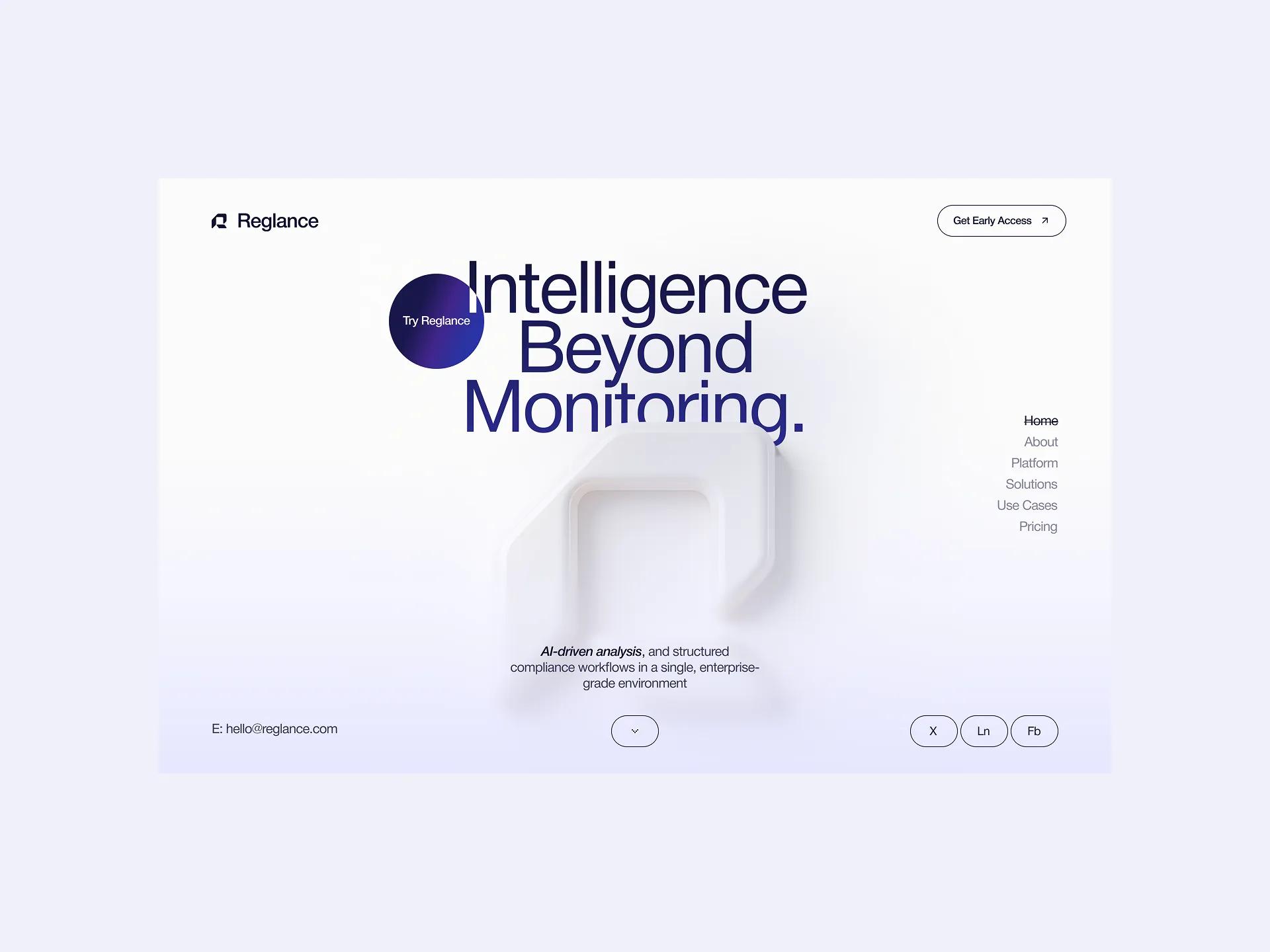
How we built an AI-driven compliance monitoring platform that reduced detection time from 28 days to 3 — covering 80+ sources across 37 jurisdictions and 21 languages for a leading European payment processor.

Strategic Planning
to Execution
[✳]Our AI strategy process moves from discovery through validation and into a roadmap you can execute. Every organisation's situation is unique, so we tailor each engagement. The steps below create clarity: honest assessment of what's possible, where the highest-impact opportunities lie, and what it will cost to get there.












Engagement
Models
[✳]Project-Based Strategic Assessment
The standard engagement model for organisations starting an AI journey. Runs 8–12 weeks, covers discovery, data assessment, use-case evaluation, and feasibility analysis. Concludes with a prioritised roadmap, vendor recommendations, and proof-of-concept scoping. Most common when you're exploring AI across multiple departments and need an organisation-wide strategy.
Monthly Advisory Retainer
Ongoing guidance as you navigate AI implementation. Ideal when you have internal teams building AI solutions but need external validation, vendor oversight, or guidance on emerging technologies. We meet monthly to review progress, assess new use cases, and course-correct as business priorities shift.
One-Time Intensive Workshop
Focused 2–3 day workshop for a specific strategic question: should we build this AI product, how do we evaluate vendors, or what's our data readiness for a particular use case. Less commitment than a full strategic assessment, but deeper than a one-hour consultation. Outputs a detailed analysis and recommendations you can act on immediately.
Continuous Implementation Oversight
As you move into execution—whether building custom solutions or deploying third-party platforms—we provide ongoing validation, vendor oversight, and guidance on best practices. We monitor progress against your strategy, flag scope creep or emerging risks, and keep implementation aligned with the original business case and success metrics.

FAQ
[11]How do I know if the problem is suitable for AI implementation?
Generally, AI works well when workflows include repetitive tasks that follow patterns, sufficient historical data to learn from, and a clear definition of what correct looks like. Suitability also depends on whether the business problem matters enough to justify the investment and timeline. During discovery, we assess these factors systematically and provide honest guidance on whether AI is the right approach or whether a simpler solution would deliver more value faster.
What data do you need to get started?
For discovery and use-case identification, we primarily need access to people—the leadership, operations teams, and subject-matter experts who understand your processes. For data readiness assessment, we need to audit your data infrastructure and see representative samples of the data you'd use to train models. It doesn't need to be clean or perfectly structured; we assess it as-is and create a roadmap for any preparation work needed.
What happens if we discover that AI isn't the right solution?
That's a successful outcome. We identify it early, before you've spent significant resources on development. We'll explain why the use case isn't well-suited to AI and recommend alternatives that might deliver better results—process improvements, simpler automation, different technology, or no change at all. Our job is to give you honest guidance so you invest in the right problems.
How much does an AI strategy engagement typically cost?
A project-based strategic assessment typically ranges from £15,000 to £40,000, depending on organisational complexity and the number of use cases being evaluated. A one-time intensive workshop runs £5,000 to £15,000. Monthly advisory retainers typically start at £3,000 per month. We'll provide a detailed proposal after an initial conversation about your scope and timeline.
Can you help us evaluate specific AI vendors?
Yes. Vendor evaluation is a core part of our build-vs-buy analysis. We assess vendors across technical fit, integration complexity, cost of ownership, governance and compliance capabilities, and vendor stability. We've worked with leadership teams to evaluate dozens of AI platforms and can provide honest comparison to help you negotiate from a position of strength.
What if we've already tried AI and it failed?
Understanding why the previous attempt didn't work is exactly where our assessment starts. We'll review what was attempted, what went wrong, and whether the problem itself is suitable for AI or whether the execution approach was misaligned. Some problems aren't suited to AI at all; others just need a different technical approach, better data preparation, or stronger change management. We'll give you clarity on which is the case.
How long does a strategic assessment typically take?
A full project-based strategic assessment runs 8–12 weeks. The timeline includes discovery conversations (2–3 weeks), data readiness assessment (2–3 weeks), feasibility analysis (2–3 weeks), and delivery of the final roadmap (1–2 weeks). We can compress the timeline for a focused engagement or extend it if you prefer a more measured pace with broader stakeholder input.
What deliverables do we get from a strategic assessment?
You'll receive a prioritised list of AI use cases ranked by business impact and implementation feasibility, a detailed data readiness assessment with a preparation roadmap, build-vs-buy analysis for each top-priority use case, vendor evaluation and commercial recommendations, and a detailed implementation roadmap including timeline, budget, and required capabilities. All recommendations are grounded in your actual data, infrastructure, and constraints—not generic templates.
Can we run a proof of concept after the strategy work?
Absolutely. In fact, we design the strategy phase so the top-priority use cases are immediately ready for proof-of-concept scoping. Once you've approved the roadmap, we can scope a focused PoC to validate the technical approach before full-scale development or vendor implementation. Many clients move directly from strategic assessment into PoC work with us.
Who from our organisation needs to be involved in the assessment?
You'll need stakeholders across leadership (to define business priorities and success metrics), operations (to understand current workflows and pain points), IT and data (to assess infrastructure and data readiness), and the teams who would actually use an AI solution. The assessment works best with 6–8 hours of stakeholder time spread across several weeks, not a single day. This gives us access to the perspectives and context we need to give you honest recommendations.
Do you provide implementation support after the strategy phase?
Yes, if you want it. Many clients move directly from the assessment into proof-of-concept work or full implementation. We can stay involved as advisors, vendor managers, or delivery partners depending on your preference and internal capability.