Custom AI/ML
Development
We build custom generative AI and machine learning solutions that help professionals focus on what humans do best: strategic thinking, relationship building, and creative problem-solving. Our AI applications multiply professional impact, delivering insights and completing tasks at machine speed while humans direct the strategy. From AI-powered chatbots and conversational AI to demand forecasting and predictive maintenance, we develop solutions that drive operational efficiency and scalability across the organisation.


Advanced AI
that Empowers Professionals
[✳]After a dozen projects building generative AI solutions for leading US and European companies, we've learned what separates success from failure. It's not the sophistication of the algorithms or excessive AI model training. It's whether the AI technology genuinely helps people do their jobs better. The best AI acts as an intelligent assistant, augmenting human judgement rather than attempting to replace it. That's why we start every engagement with rigorous validation. Our AI strategy consulting process outlines the existing application ecosystem, runs an AI readiness assessment and data readiness assessment, evaluates infrastructure requirements, defines success metrics, and builds a working prototype first.
We focus on stakeholder alignment from day one, making sure the people who will use the system have a voice in shaping it. If generative AI isn't the right answer, the team provides honest guidance before any development and deployment spending begins. Discovery phase work often includes evaluating whether pretrained models can address the need or whether custom AI model development is required. We assess data quality, review data preparation workflows, and map out how a solution would integrate into the broader cloud architecture. This combination of AI strategy consulting and hands-on technical evaluation gives leadership the clarity they need to make informed investment decisions.

of Gen AI)
Faster data extraction
Achieved through AI application integration into each time-consuming process, from data extraction from client documents to AI-driven peer selection, delivering results that manual approaches cannot match at scale.
Faster equity valuation
Achieved by automating data-intensive research tasks via AI tools, freeing analysts to spend time on peer comparability assessment, market trend prediction, and investment risk evaluation rather than manual data gathering. This kind of data-driven decision-making is where AI delivers the most measurable impact.
Faster regulatory processing
Delivered by an AI-powered system that automates the collection, categorisation, and extraction of regulatory documents at scale, eliminating manual monitoring and data entry across multiple jurisdictions. The platform supports regulatory compliance and handles fraud detection flags as part of its processing pipeline.
Faster new hire onboarding
Enabled by generative AI integration as a knowledge management assistant that reduces time spent on in-person explanations and eliminates delays from self-guided learning failures. Personalisation of learning paths and conversational AI interfaces makes onboarding feel less like a chore and more like a guided experience.
Proven Generative AI Solutions
to the Challenges We're Asked to Solve
[✳]Custom AI solutions deliver competitive advantage across the board: automation of repetitive workflows, risk management through anomaly detection, and revenue growth through better personalisation and demand forecasting. The operational efficiency gains compound over time as models learn from new data and teams build confidence in AI-assisted processes.
The generative AI solution extracts structured data from PDFs, scanned documents, and presentations, handling exceptions and edge cases that rule-based automation cannot address. It reads, interprets, and transforms documents into actionable data at scale. In healthcare, similar approaches power diagnostics support and medical imaging analysis workflows. In financial services, the same core technology drives credit decision automation and investment risk evaluation.


The generative AI solution automatically sorts, tags, and routes items using custom taxonomies aligned with business logic. Whether classifying companies, transactions, support tickets, or content, the system trains on existing categories, not generic industry models. Retail clients use this for recommendation engines. Financial services firms use it for credit decision automation and regulatory filing categorisation.


The generative AI solution processes regulatory filings, compliance documents, and legal texts at scale. It extracts required data points, flags anomalies, and maintains comprehensive audit trails, eliminating the need for manual document review. Built-in security controls and data encryption protect sensitive information throughout the pipeline.


The generative AI solution identifies outliers, fraud detection signals, and quality issues in data before they escalate. Detection models are tuned to the specific domain, risk tolerance, and operational thresholds of each organisation. Applications range from financial fraud detection to predictive maintenance in manufacturing environments.


The generative AI solution transforms unstructured information (documents, emails, transcripts) into searchable, queryable knowledge. It helps teams surface answers in minutes rather than hours, reducing dependency on institutional memory. Conversational interfaces make the search experience feel natural, and the system improves over time through continuous optimization as usage patterns emerge.


Our Expertise
)We align AI investment with business outcomes, ensuring every model is purposeful, measurable, and built to deliver real impact. Our custom generative AI development services boost productivity and workflows. Clients trust us for generative AI tools that deliver insights, reduce errors, and streamline workflows while remaining compliant and secure.
- Asset Management & Investment Funds
- Personal Finance
- Private Equity & Venture Capital
- Banking & Financial Services
- Audit & Assurance
- Governance, Risk & Compliance
- Internal Workflows
- Fintech & Payments
- Wealth Management
- Corporate Finance
- Treasury & Liquidity Management
- Risk & Fraud Management
Case Studies
[3]- Branding for Digital Bank

A complete visual identity system — logo, palette, typography, illustration language, and an 80-template application kit — built for a pre-launch European digital bank ahead of its Series A round.
- Location-based CRM
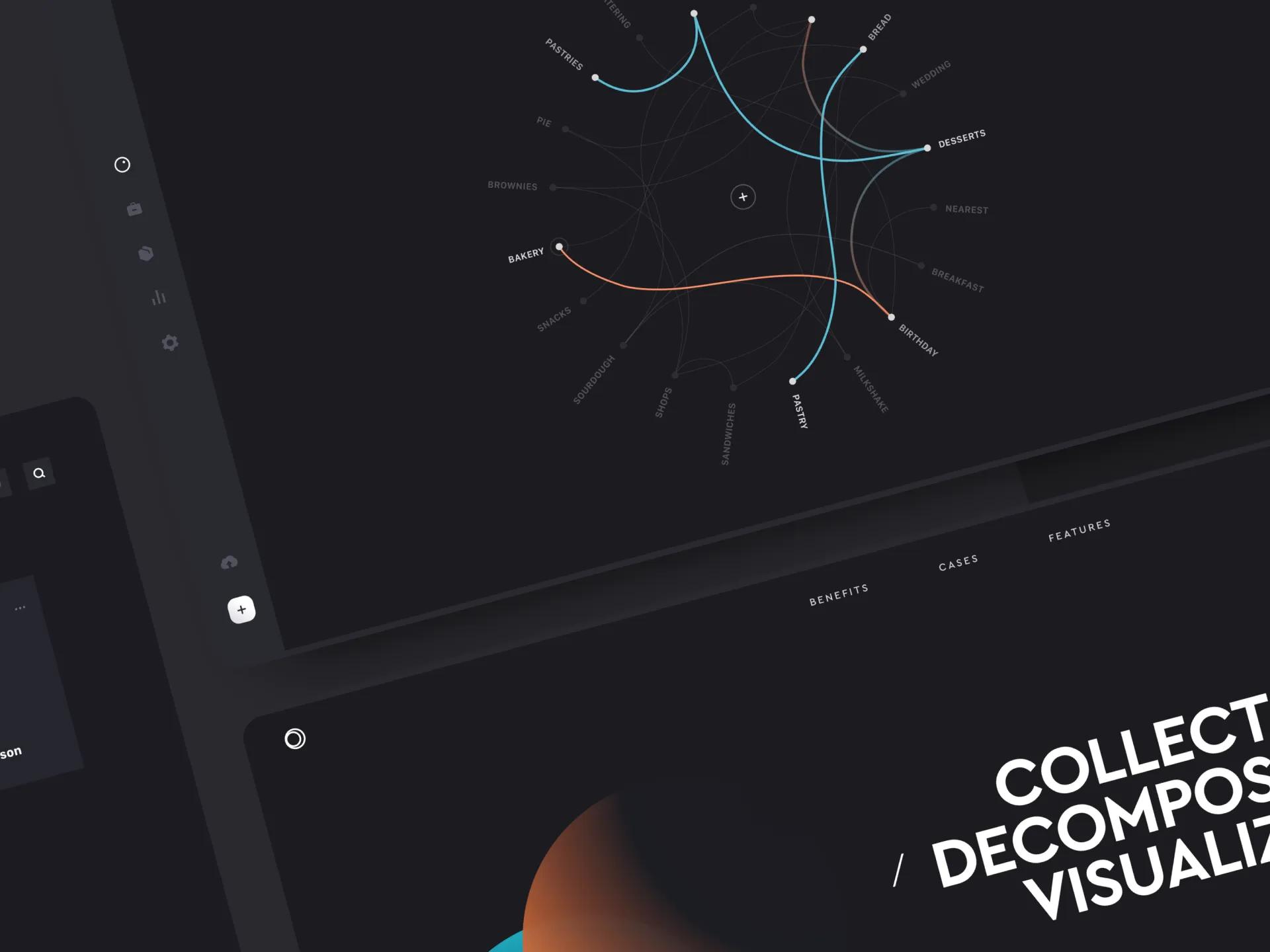
Location-aware CRM and analytics platform
US data analytics company unified geospatial intelligence, CRM, and social-listening data into a location-aware platform for food and retail chains to understand customer movement and competitive activity.
- AI-Driven Compliance Monitoring Software
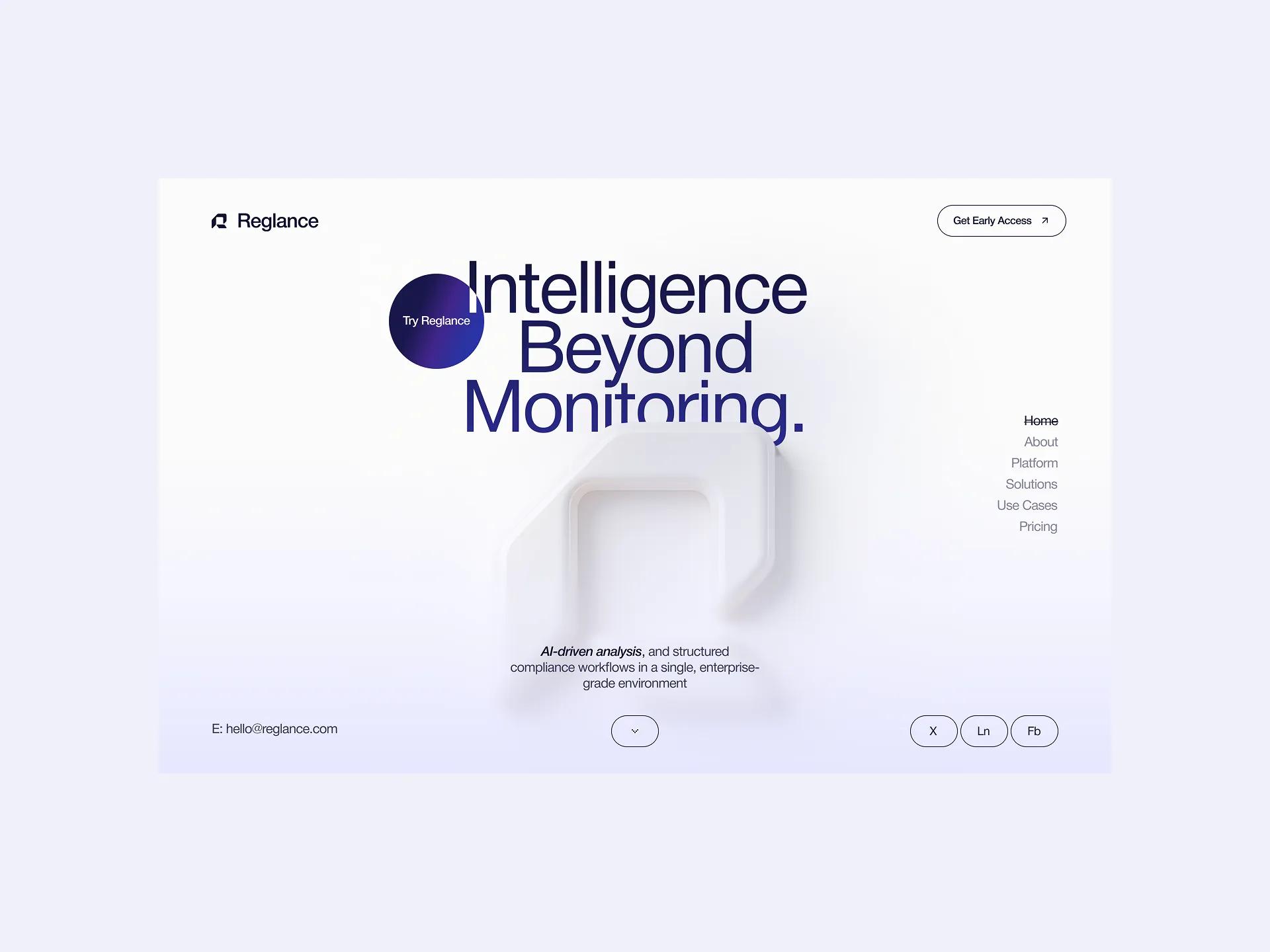
How we built an AI-driven compliance monitoring platform that reduced detection time from 28 days to 3 — covering 80+ sources across 37 jurisdictions and 21 languages for a leading European payment processor.

From Challenge to Production:
Shipping One-of-a-Kind Solutions Built for Specific Gen AI Needs
[✳]Every generative AI development engagement is unique. Company data, workflows, edge cases, even the definition of success: none of it matches a template. Building a solution that truly fits requires commitment from both sides. The business team brings domain expertise and access to real scenarios. Our product development team brings technical depth and delivery discipline.












Engagement Models for
Generative AI Development Services
[✳]Monthly or Quarterly Retainer
The primary engagement model for ongoing custom generative AI solutions development and project support. Guarantees dedicated team capacity, predictable budgeting, and priority scheduling. Works best for continuous development, iterative improvements, and long-term partnerships where team familiarity with the business domain drives efficiency. Retainer teams handle everything from model retraining and model versioning to new feature development and model governance.
Fixed Price Proof of Concept
Available exclusively for PoC engagements with a clearly defined scope and success criteria. Provides cost certainty during validation and allows for testing AI-related hypotheses before developing a scalable generative AI product. Concludes with documented findings, performance metrics, and actionable recommendations.
Time & Materials (Project Boost)
Best suited for short-term generative AI development acceleration, temporary capacity expansion, or specialised expertise. Billing is based on actual hours worked, with complete visibility into who's on the team and how time is spent. Maximum flexibility to scale up or down as project needs evolve. This is our most common delivery model for staff augmentation and project outsourcing needs.
AI Experts Outstaffing
Top generative AI professionals join the organisation full-time as dedicated teams, reporting to internal management and working within established processes. This model works well when projects require long-term capacity with direct oversight or have specific compliance requirements. BN Digital handles recruitment and employment.

FAQ
[22]How do I know if the problem is suitable for gen AI development services?
Generally, AI works well when workflows include repetitive tasks that follow patterns, sufficient historical data to learn from, and a clear definition of what correct looks like. During discovery, we assess these factors, determine how generative AI can help within given constraints, and provide honest recommendations on whether to implement AI or pursue alternatives that will work better.
What data do you need to get started?
For discovery, we need access to representative samples of the data involved in the existing or planned workflows: documents, records, transactions, or whatever is relevant to the challenge. It doesn't need to be clean or perfectly organised. During the PoC phase, we can work with anonymised or dummy data if sensitivity is a concern, though models trained on production data typically yield more accurate validation results. We run a data readiness assessment early on to understand what preparation is needed.
How long does a typical AI development project take?
Most proof-of-concept solutions take 6 to 8 weeks, and most projects range from 3 to 6 months. Production development varies based on complexity, integration requirements, and scope. We establish realistic timelines during discovery and provide regular progress updates throughout.
What if the proof of concept doesn't deliver the expected results?
That's exactly why we start with a PoC, to validate the approach before committing significant resources. If results fall short, you've invested 8 weeks instead of 8 months. We'll share what we learned, explain why it didn't work, and recommend whether a different approach might succeed or whether to apply generative AI to a different workflow.
Are the case studies based on real client projects?
These case studies showcase real-world examples of custom AI projects we've delivered, highlighting the outcomes and real-world impact each solution had on client operations. That said, we honour non-disclosure agreements, which means some engagements appear with anonymised names or adjusted business details. Where a client has permitted it, we use real names and specifics. Where they haven't, we protect what's confidential while keeping the outcomes and methodology accurate.
How do you handle sensitive or regulated data?
We have extensive experience working with financial services and professional services firms where data sensitivity is paramount. We can work on-premise, within existing cloud environments, or with anonymised datasets. Our solutions are designed to integrate and operate within highly secure client infrastructure. All engagements include appropriate NDAs and data handling agreements.
What's the typical investment for a custom AI development project?
A proof of concept typically ranges from £25,000 to £50,000, depending on complexity and data requirements. Production development costs vary significantly based on solution complexity, deployment scale, infrastructure complexity, and model accuracy and performance requirements. Most projects fall between £75,000 and £250,000. Enterprise-scale deployments may exceed this range.
The most common causes of cost overruns in AI projects are scope creep and underestimating data management system implementation costs. We mitigate this with a clear cost structure from the start: licensing fees for third-party tools, compute costs, and development hours are all broken out separately. Our time-and-materials model means clients pay for actual work delivered, with full transparency into team composition, hourly rates, and hours logged.
Do we need in-house AI expertise to work with you?
No. We create AI strategy and documentation, build a custom solution, train a model, integrate AI, deploy it, and train end users end-to-end. What we do need is access to subject matter experts, the people who understand the processes, data, and what good outcomes look like. Their domain knowledge is essential for building a solution that actually fits the business.
Who owns the intellectual property?
The legal entity working with us gets full intellectual property rights. We don't retain any rights for the models we train on client data, the data itself, the code we write for the solution, or any custom components we develop.
What are our AI technology stack and tools?
Our AI technology stack spans the machine learning frameworks, cloud services, and MLOps tools commonly used in custom AI development, selected based on what each project actually needs.
For cloud services, we work with AWS infrastructure and Amazon SageMaker, Azure Machine Learning, and Vertex AI on Google Cloud. Our MLOps workflows rely on CI/CD pipelines automated through GitHub Actions for testing, building, and deploying models into production.
On the framework side, we use Keras for rapid prototyping and Transformers by Hugging Face for NLP and large-scale language tasks. For production deployment, we build custom model-serving tools tailored to each client's infrastructure and traffic requirements.
We also integrate explainability tooling into every solution. Shapley Additive Explanations (SHAP) and Local Interpretable Model-Agnostic Explanations (LIME) help stakeholders understand why models make specific predictions, which is essential for trust, debugging, and regulatory conversations. The stack is never fixed upfront. We choose tools based on what the project requires, not what looks good on a slide.
Can you integrate with existing systems?
Yes. We're a software development company first, which means we build solutions that integrate with existing infrastructure: ERPs, CRMs, document management systems, databases, APIs. During discovery, we map out integration requirements and factor them into the project plan.
What AI technology stack do you use?
It depends on the problem. We work across major cloud platforms including AWS infrastructure with Amazon SageMaker, Azure Machine Learning, and Google Cloud's Vertex AI. Our MLOps pipelines use CI/CD pipelines with GitHub Actions for automated testing and deployment. On the modelling side, we work with frameworks like Keras and Transformers by Hugging Face for deep learning tasks, and we build custom model-serving tools for production deployment.
For model explainability, we use SHAP (Shapley Additive Explanations) and LIME (Local Interpretable Model-Agnostic Explanations) to help stakeholders understand why models make specific predictions. The stack is never fixed upfront. We choose tools based on what the project actually needs, not what looks impressive on a slide.
What industries benefit most from custom AI development?
We've delivered solutions across healthcare, fintech, manufacturing, real estate, and retail. In healthcare, our work spans diagnostics support, medical imaging analysis, radiology and diagnostic imaging workflows, and treatment plan personalization. In fintech, common applications include credit decision automation, investment risk evaluation, market trend prediction, and fraud detection. Retail clients typically focus on recommendation engines and demand forecasting.
Across all industries, the common thread is automating administrative tasks, improving data engineering pipelines, and building on scalable cloud architecture. The specifics vary, but the underlying AI modelling approach adapts to each domain. We've also built custom ML algorithms for an insurance platform and delivered AI-supported car damage detection services for an automotive client.
What are the main cost and pricing considerations?
The cost of custom AI development services depends on several factors, including project scope, solution complexity, and the pricing model you choose. Key cost drivers include deployment scale, infrastructure complexity, model accuracy and performance requirements, data management system implementation costs, and licensing fees for third-party tools or pretrained models.
The most common source of budget pressure is scope creep, where requirements expand beyond the original definition during development. We address this by establishing a clear cost structure during discovery, with compute costs, development hours, and tooling fees broken out separately. Choosing the right engagement model (fixed-price PoC, retainer, or time-and-materials) also helps align spending with how the project is likely to evolve. Data quality is another factor that's easy to underestimate. Poor data preparation or gaps in training data can add cycles to the project, so we flag these risks early during the data readiness assessment.
How do you ensure AI security, compliance, and ethical AI?
Data security, compliance with regulations, and ethical considerations are central to how we develop and deploy custom AI solutions. These aren't separate workstreams. They're built into every phase of the project.
On the security side, we implement data encryption at rest and in transit, enforce strict security controls around who can access what, and maintain full dataset lineage so the origin and transformation history of every data point is traceable. Data privacy requirements shape architecture decisions from the start.
For regulatory compliance, we work within established governance frameworks relevant to each client's industry and geography. Our model retraining procedures include version control and approval workflows, so no update reaches production without proper review.
On the ethical side, we build bias mitigation into the development process, testing for fairness across relevant population segments before deployment. Explainability tooling ensures that model outputs can be examined and understood, not treated as black boxes. Transparency about what the model can and cannot do is something we communicate clearly to every client team, especially in high-stakes applications like fraud detection and credit decisioning.
What is your industry-specific AI applications expertise?
Our custom AI development services are tailored for different industries, with each solution designed around the specific use cases and benefits that matter most in that domain.
In healthcare, we build solutions for diagnostics support, medical imaging analysis, radiology and diagnostic imaging workflows, and treatment plan personalization. In fintech, our work covers credit decision automation, investment risk evaluation, market trend prediction, and fraud detection. Retail clients typically come to us for recommendation engines, demand forecasting, and personalization of the customer experience. We've also delivered solutions for manufacturing (predictive maintenance, anomaly detection), real estate, and insurance, including custom ML algorithms for an insurance platform and AI-supported car damage detection services for an automotive client.
Across all of these, the common foundations are the same: solid data engineering, scalable cloud architecture, and AI modelling that adapts to domain-specific edge cases. We also focus on automating administrative tasks that drain professional time, freeing teams to focus on judgement-intensive work.
What is our AI development process and methodology?
Our custom AI development follows a structured lifecycle that covers every stage from initial data analysis through to deployment, integration, and ongoing monitoring. The methodology is built around five phases: discovery and data preparation, model design and architecture, training and evaluation, production deployment with CI/CD integration, and post-launch monitoring.
During data analysis, we assess data quality, clean and structure training datasets, and identify gaps that could affect model performance. Model design involves selecting the right model architecture, whether that means deep learning, classical ML, or a hybrid approach, and running hyperparameter tuning to optimize for the specific use case. Training includes rigorous model evaluation against the success metrics defined during discovery, with benchmarks for accuracy, latency, and edge case handling.
Deployment is handled through MLOps pipelines that automate testing and integration into existing systems. Once live, we set up model drift monitoring and governance protocols to track performance and control when and how models are retrained. The goal is to productionalize AI models in a way that's repeatable, auditable, and maintainable over time, not just accurate on day one.
What are the main benefits and business impact of AI?
The business advantages of implementing custom AI solutions span operational efficiency, cost reduction, enhanced customer experience, revenue growth, and competitive advantage. The specifics depend on the use case, but the patterns are consistent across industries.
Operational efficiency improves when automation takes over repetitive, time-consuming tasks, freeing professionals to focus on higher-value work. Cost reduction follows naturally: fewer manual hours, fewer errors, and faster turnaround on processes that used to bottleneck operations. On the revenue side, AI enables better personalization, smarter demand forecasting, and data-driven decision-making that helps teams act on opportunities faster than competitors.
Customer experience benefits come from tools like AI-powered chatbots and conversational AI that provide instant, accurate responses, and from recommendation systems that surface what's actually relevant. Risk management improves through fraud detection and predictive maintenance, catching problems before they become expensive. And because well-built AI solutions are designed for scalability, these benefits compound as the business grows and the models learn from more data.
The impact is measurable. Clients typically track it through reduced processing time, lower error rates, higher throughput, and improved customer satisfaction scores. AI application integration into existing workflows is what turns theoretical advantages into day-to-day results.
What's the difference between consulting and strategy services?
Our consulting and advisory services help organisations define AI strategies, conduct feasibility studies, and plan successful AI adoption and integration before any development begins. This is separate from building the solution itself.
AI strategy consulting starts with understanding where AI can realistically add value within existing operations. We run an AI readiness assessment to evaluate whether the organisation's data, infrastructure, and team processes are ready for AI adoption. This includes a data readiness assessment, a review of infrastructure requirements, and stakeholder alignment sessions to make sure leadership and end users share the same expectations.
From there, we conduct feasibility studies that test whether a proposed AI approach is technically viable and commercially worthwhile. If the answer is yes, we define success metrics, outline a roadmap for AI model development and MLOps implementation, and recommend the right engagement model for the build phase. If the answer is no, we say so and explain why.
The goal of the strategy phase is to give organisations the clarity they need to invest with confidence. Proof-of-concept (PoC) solutions often follow directly from this work, providing a low-risk way to validate the strategy before committing to full-scale development. Continuous optimization planning is also part of the conversation, so teams know what post-launch support looks like before the project starts.
What types of custom AI solutions do you build?
We build a wide range of custom AI solutions, each tailored to the specific problem a client needs to solve. The most common types include chatbots and conversational AI, computer vision systems, natural language processing (NLP) applications, predictive analytics platforms, recommendation engines, and generative AI solutions.
Chatbots and AI-powered chatbots handle customer interactions, internal knowledge queries, and onboarding workflows. Computer vision powers use cases like medical imaging analysis, radiology and diagnostic imaging, and AI-supported car damage detection services. NLP is at the core of our document processing, classification, and enterprise search platforms, where the system needs to read, interpret, and act on unstructured text.
Predictive analytics drives applications like demand forecasting, investment risk evaluation, market trend prediction, and predictive maintenance, where the goal is to flag what's likely to happen before it does. Recommendation engines personalise experiences for end users, whether that's suggesting investment strategies, surfacing relevant content, or prioritising next actions.
Generative AI is the newest category, and it's where most of our current work sits. These solutions go beyond classification and prediction to actually produce outputs: drafted documents, extracted data summaries, categorised records, and synthesised research. Every solution we build uses the approach that fits the problem, not the one that sounds most impressive.
How do you handle bias and fairness in AI models?
Bias mitigation is part of our standard development process. During data preparation, we audit training datasets for demographic and sampling biases. During model evaluation, we test for fairness across relevant population segments and flag any disparities before deployment.
We build explainability into production systems so that model outputs can be examined and understood, not treated as black boxes. This matters especially in high-stakes domains like credit decision automation and diagnostics support, where biased outputs have real consequences. Transparency about what the model can and cannot do is something we communicate clearly to every client team.
What does continuous optimisation look like after launch?
Once a solution is in production, we set up model drift monitoring to track performance against the benchmarks established during development. When accuracy drops or data patterns shift, automated alerts trigger a review cycle.
MLOps implementation covers the full lifecycle: model retraining on fresh data, model versioning to manage rollbacks, and CI/CD integration to push validated updates into production safely. We also track key performance indicators (KPIs) agreed on during discovery and report on them regularly. Continuous optimisation is not a one-time tune-up. It's an ongoing process that keeps the system accurate and relevant as the business evolves.